


1960’s


1960
1965
1966
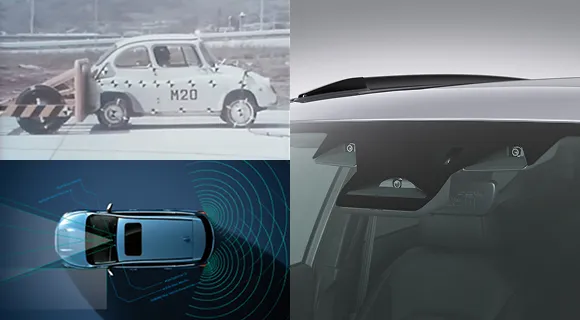
Advanced, realistic crash testing conducted as a Japanese manufacturer making use of guiderails and crash test dummies.
Rear-end crash testing of the Subaru360.
The first Japanese manufacturer to begin crash testing (frontal, rear-end).
Subaru1000: Subaru’s first FWD car powered by the SUBARU BOXER is released. High levels of safety are obtained in collision safety testing.

1970’s


1971
1972
1977
1979
A special Subaru collision safety programme is developed as part of collision safety testing for the Leone.
Subaru Leone 4WD Station Wagon, the world’s first mass-produced 4WD passenger car, is released. It features a selective system where the driver could switch from 4WD to 2WD mode.
Engine drop tests begin for the American Leone (L-Series).
Leone 4WD tests: As part of steps to improve collision safety for the Leone 4WD, the propeller shaft and differential are designed to split and drop down during a collision.

1980’s


1981
1983
1986
1987
1989
“Leone 1800cc 4WD Automatic” is released, using the world’s first wet hydraulic multi-plate clutch in the rear wheel drive transfer case of its AWD automatic transmission.
4WD turbo Leone equipped with an air suspension system to hydraulically adjust the height of the car.
Research into the use of high-tensile materials for car frames begins.
XT: Plastic bumpers that comply with the five-mile-an-hour rule introduced in America as the first “energy absorbing bumpers” developed in the world.
Leone 3-door hatchback coupe RX-II (1.8-litre turbo engine) uses a full-time AWD system with a bevel-geared and differential-lock centre differential.
MP-T 4WD developed into the full-time 4WD “ACT-4” system, operating on pulse control to predict front and rear torque distribution.
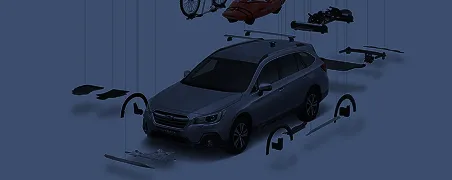
First generation Legacy released. The model became the Subaru’s new safety standard in order to further improve safety and protection in actual collisions.
Turbo Legacy comes equipped with the full-time 4WD system with viscous coupling LSD centre differential. A tandem brake booster braking system increases the safety of the car.

1990’s


1990
1991
1993
1996
1998
1999
Installation of on-board crash data acquisition systems/crash test facilities.
“VTD-4WD (Variable Torque Distribution 4-Wheel Drive)” for outstanding turning, and the “4WS” (four-wheel steering system) installed in the SVX for a superior balance between safety and driving enjoyment.
Second generation Legacy: The rigidity of frameless car bodies that provide protection against offset collisions is increased for even higher levels of collision safety.
First generation Forester: Built on the Ring-Shaped Reinforcement Frames body for the current superior levels of collision safety.
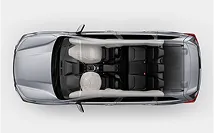
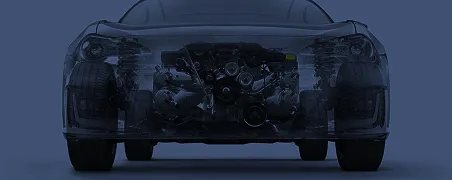
Third generation Legacy: The Ring-Shaped Reinforcement Frames body and front frame structure envelopes the Horizontally-Opposed Engine. The installation of front side airbags raises collision safety to unprecedented levels.
“ADA (Active Driving Assist)” driver assist system using stereo cameras is released and installed in the Japanese Legacy.

2000’s


2003
2007
2008
Car-to-Car crash tests: To improve safety even further, construction of crash test facilities that recreate actual crash conditions is completed.
.
Safety improved immensely with the “SUBARU Dynamic Chassis Control Concept (DC³)” concept, to take driving enjoyment to new heights.
“EyeSight” is released as the world’s first safety technology operating using only stereo cameras.

2010’s


2010
2014
2015
2016
2017
2018
Advanced “EyeSight (ver.2)” driving support system.
Advanced "EyeSight (ver.2)"* driving assist system awarded the 2010/2011 Japan Automotive Hall of Fame Car Technology of the Year *Japanese specifications.
EyeSight is enhanced, with improvements made to core functions such as the use of colour stereo camera images
EyeSight launched in the European market with the new Outback, following on from release in Japanese, Australian and North American markets.
Levorg was released in Japan with the “Advanced Safety Package,” which included four functions: Subaru Rear Vehicle Detection, Side View Monitor, High Beam Assist, and EyeSight Assist Monitor. This increased safety around the entire car to enhance overall safety.
Impreza based on the Subaru Global Platform released
Total of 1 million EyeSight-equipped Subaru Vehicles sold globally
Subaru EyeSight upgraded with new “Touring Assist” function in Japan
Subaru completed construction of its test tracks for Advanced Driver Assist Technologies at its Bifuka Proving Ground in Hokkaido, Japan.
Subaru’s EyeSight Driver Assist System won the President’s Award from the Japan Techno-Economics Society
Why Subaru?
Continue explore
Subaru difference
Subaru difference