







Early detection of dangerous events can help to prevent accidents, and drivers who are able to identify danger early have fewer accidents. Given this, SUBARU has concentrated its efforts on designs that improve visibility.
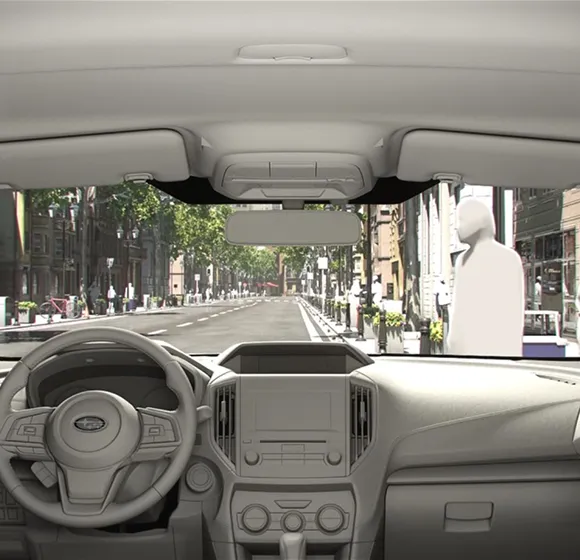
The most effective way of preventing an accident is if drivers can detect dangerous situations with their own eyes. SUBARU is committed to designs that minimise blind spots and provide excellent visibility from the driver’s seat. The width of each chassis pillar has been minimised where possible to increase the windshield area while ensuring the same level of safety, and the windshield wipers are stored out of line of sight to provide maximum visibility to the driver. The shape of the body has also been designed for free line of sight to give the driver a better idea of the car’s dimensions. Excellent visibility and no obstructions to line of sight means safer driving.
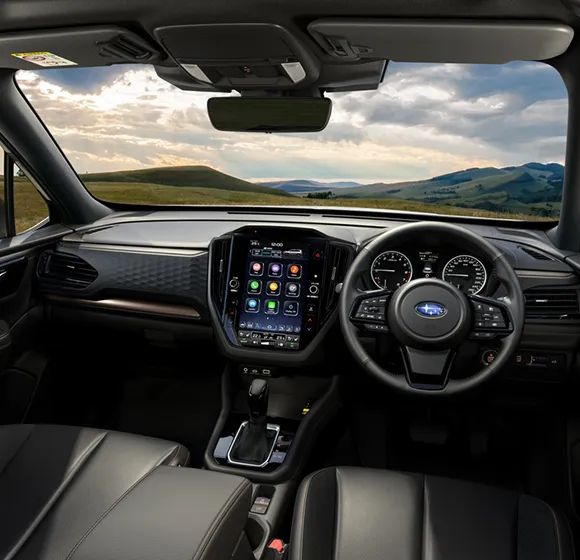
A light sensor turns on the headlamps automatically at dusk, which prevents the driver from forgetting to turn the lamps on when driving in the evening or in tunnels where accidents are common. In addition to ensuring a greater level of visibility, this also increases car’s visible presence to others. The safety of the driver and passengers, as well as other cars, pedestrians and road users are all incorporated in SUBARU’s concept of providing a safe driving environment. The HID headlamps are a similar colour temperature to sunlight and light up the road ahead so the driver can drive safely and confidence. The system shuts the headlamps off when the key is removed from the ignition.
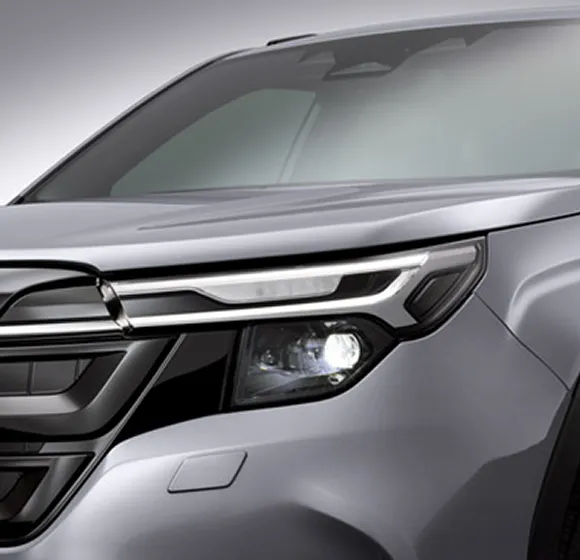
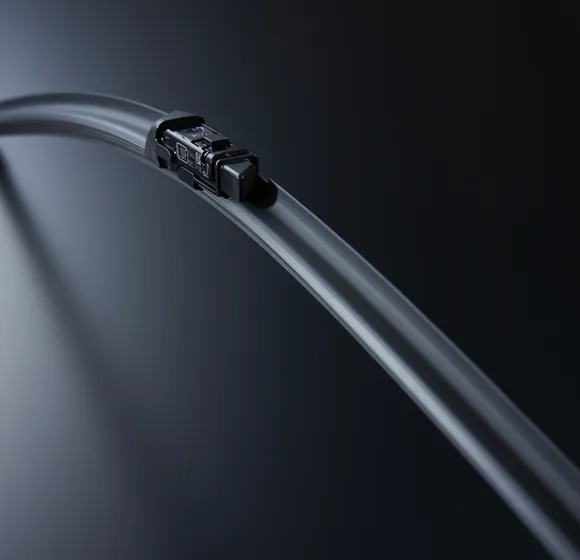
Automatic windshield wipers detect rainfall on the glass and adjust their wiping interval and speed accordingly. This proves invaluable when the driver needs to concentrate on steering and driving in rain, snow or on other slippery roads. The wipers themselves are designed with a shape that prevents them lifting up due to wind resistance when driving at high speeds. This not only increases the swept area during operation, but stay out of the way when not in use to ensure maximum visibility.
The optimal driving position.
The correct driving position that allows natural movement required for driving reduces fatigue and helps to improve safety and comfort when driving. An optimum driving position will also make it easier for the driver to feel how the car is reacting when the need arises to take evasive action as it ensures they can steer the car properly. SUBARU uses seats with a structure that provides drivers with the correct driving position, and has also increased the range of seat adjustment and steering wheel so that drivers with a greater variety of body types can find their optimum driving position.
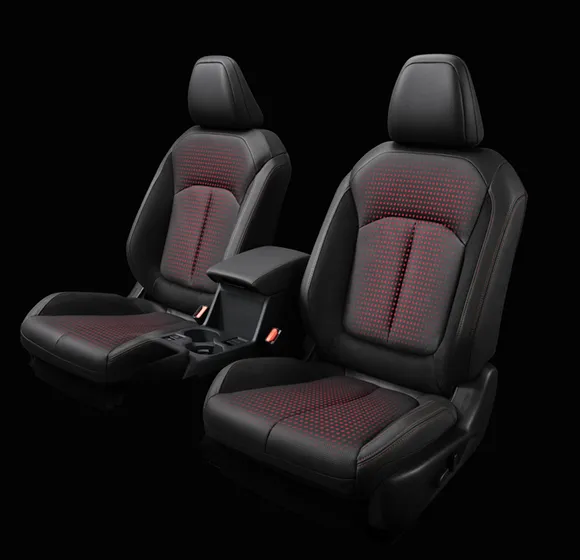
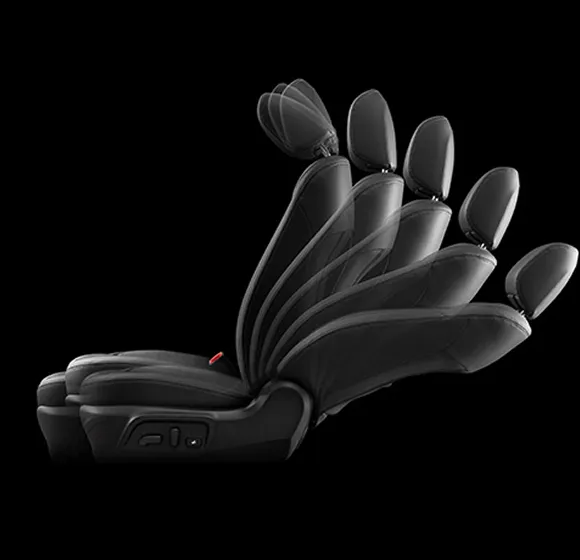
SUBARU has incorporated seat adjustment mechanisms so drivers of any stature can find their optimum driving position. An electronic seat lifter, tilt, slide and reclining functions allow the driver to set their most comfortable seat position. A relaxed driving position means less fatigue when driving for long hours, which in turn helps to increase safety.
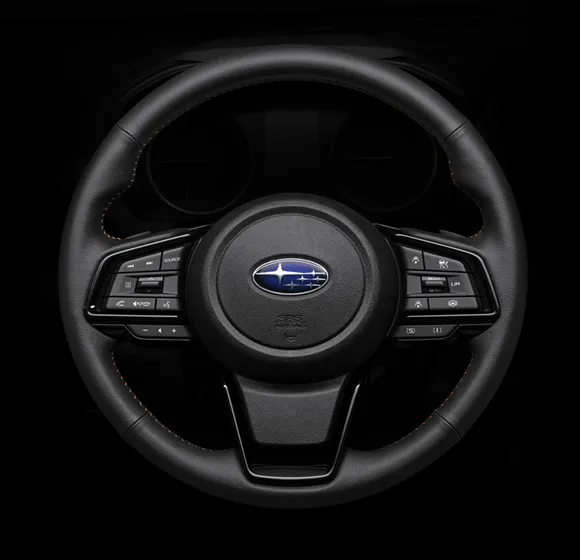
To help set the optimum driving position, the adjustable steering wheel tilts up-down and telescopes in-out. With minute steering position settings to suit the driver, the ideal driving posture gives rise to safer driving.
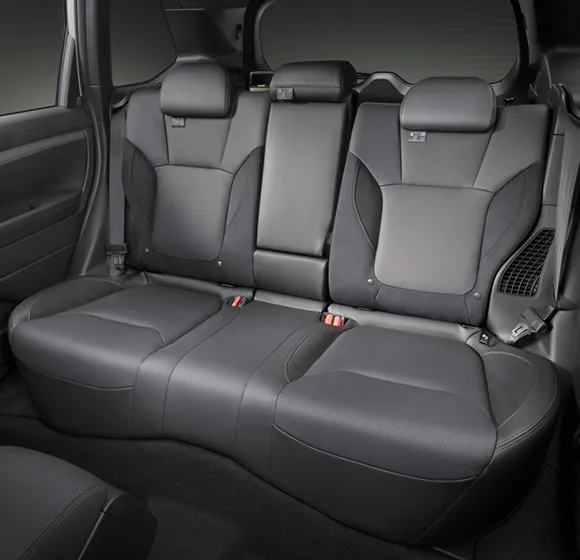
The seats support passenger bodies and also help to absorb shocks from the chassis. These seats differ to ordinary office or household seats as they are just soft enough to absorb shocks from the road, and just hard enough to help reduce driving fatigue on long journeys. To achieve this, SUBARU examined the ergonomics of the seats to ensure that they can cause less stress over long hours. The weight of passengers is distributed evenly over a wide area by the bottom surface of the seat. This structure holds passengers firmly in place as they are tossed about by the car movement. Every aspect of the seats has been designed to improve seating support without compromising comfort.
Subaru focuses on the useful interface to prevent the driver from distracting the attention to drive by using navigation or adjusting air conditioning. For example, navigation monitor and Multi-Information Display are set in the position as high as meters, and air conditioner and audio to control are set in the lower area to reach easily. We also consider the shape of switches to control intuitively without watching them by adopting the bigger dial.
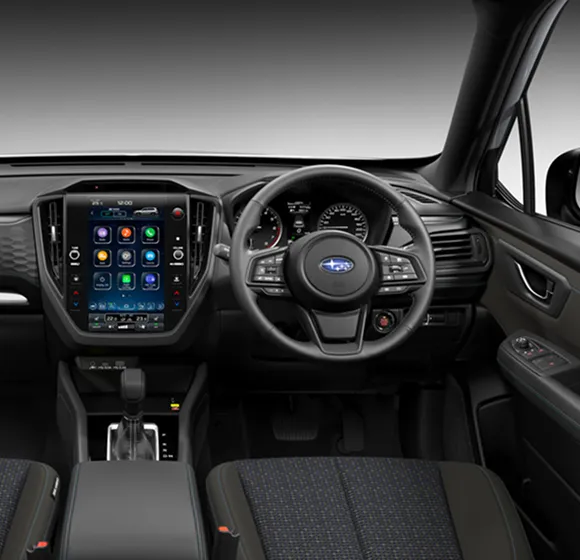
Drivers often have a lapse in concentration when checking the navigation screen or adjusting the air-conditioning. To prevent this from happening, SUBARU has designed an interface layout that is easy to use. One example of this is the navigation screen placed at the top so that drivers do not need to shift their line of vision too far. The air-conditioning system uses large knobs and switches so that drivers can check their position intuitively without having to take their eyes off the road. Audio controls are clustered around the spokes on the steering wheel so that the driver can make adjustments without having to move their hands away from the wheel. All these design features make for a driving cabin where the driver can concentrate purely on the road ahead.

Early detection of dangerous events can help to prevent accidents, and drivers who are able to identify danger early have fewer accidents. Given this, SUBARU has concentrated its efforts on designs that improve visibility.
The most effective way of preventing an accident is if drivers can detect dangerous situations with their own eyes. SUBARU is committed to designs that minimise blind spots and provide excellent visibility from the driver’s seat. The width of each chassis pillar has been minimised where possible to increase the windshield area while ensuring the same level of safety, and the windshield wipers are stored out of line of sight to provide maximum visibility to the driver. The shape of the body has also been designed for free line of sight to give the driver a better idea of the car’s dimensions. Excellent visibility and no obstructions to line of sight means safer driving.
A light sensor turns on the headlamps automatically at dusk, which prevents the driver from forgetting to turn the lamps on when driving in the evening or in tunnels where accidents are common. In addition to ensuring a greater level of visibility, this also increases car’s visible presence to others. The safety of the driver and passengers, as well as other cars, pedestrians and road users are all incorporated in SUBARU’s concept of providing a safe driving environment. The HID headlamps are a similar colour temperature to sunlight and light up the road ahead so the driver can drive safely and confidence. The system shuts the headlamps off when the key is removed from the ignition.
Automatic windshield wipers detect rainfall on the glass and adjust their wiping interval and speed accordingly. This proves invaluable when the driver needs to concentrate on steering and driving in rain, snow or on other slippery roads. The wipers themselves are designed with a shape that prevents them lifting up due to wind resistance when driving at high speeds. This not only increases the swept area during operation, but stay out of the way when not in use to ensure maximum visibility.
The optimal driving position.
The correct driving position that allows natural movement required for driving reduces fatigue and helps to improve safety and comfort when driving. An optimum driving position will also make it easier for the driver to feel how the car is reacting when the need arises to take evasive action as it ensures they can steer the car properly. SUBARU uses seats with a structure that provides drivers with the correct driving position, and has also increased the range of seat adjustment and steering wheel so that drivers with a greater variety of body types can find their optimum driving position.
SUBARU has incorporated seat adjustment mechanisms so drivers of any stature can find their optimum driving position. An electronic seat lifter, tilt, slide and reclining functions allow the driver to set their most comfortable seat position. A relaxed driving position means less fatigue when driving for long hours, which in turn helps to increase safety.
To help set the optimum driving position, the adjustable steering wheel tilts up-down and telescopes in-out. With minute steering position settings to suit the driver, the ideal driving posture gives rise to safer driving.
The seats support passenger bodies and also help to absorb shocks from the chassis. These seats differ to ordinary office or household seats as they are just soft enough to absorb shocks from the road, and just hard enough to help reduce driving fatigue on long journeys. To achieve this, SUBARU examined the ergonomics of the seats to ensure that they can cause less stress over long hours. The weight of passengers is distributed evenly over a wide area by the bottom surface of the seat. This structure holds passengers firmly in place as they are tossed about by the car movement. Every aspect of the seats has been designed to improve seating support without compromising comfort.
Subaru focuses on the useful interface to prevent the driver from distracting the attention to drive by using navigation or adjusting air conditioning. For example, navigation monitor and Multi-Information Display are set in the position as high as meters, and air conditioner and audio to control are set in the lower area to reach easily. We also consider the shape of switches to control intuitively without watching them by adopting the bigger dial.
Drivers often have a lapse in concentration when checking the navigation screen or adjusting the air-conditioning. To prevent this from happening, SUBARU has designed an interface layout that is easy to use. One example of this is the navigation screen placed at the top so that drivers do not need to shift their line of vision too far. The air-conditioning system uses large knobs and switches so that drivers can check their position intuitively without having to take their eyes off the road. Audio controls are clustered around the spokes on the steering wheel so that the driver can make adjustments without having to move their hands away from the wheel. All these design features make for a driving cabin where the driver can concentrate purely on the road ahead.

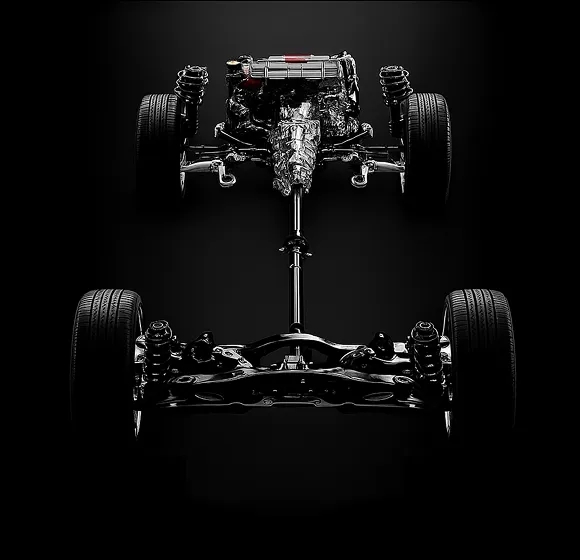
Outstanding traction and reliable drivability with the Symmetrical AWD system, and suspension with excellent control capabilities for car behavior that the driver expects. A highly-rigid and lightweight body for surefooted driving and higher levels of risk avoidance. The Hill-start Assist function also helps to reduce driver fatigue while on the road.
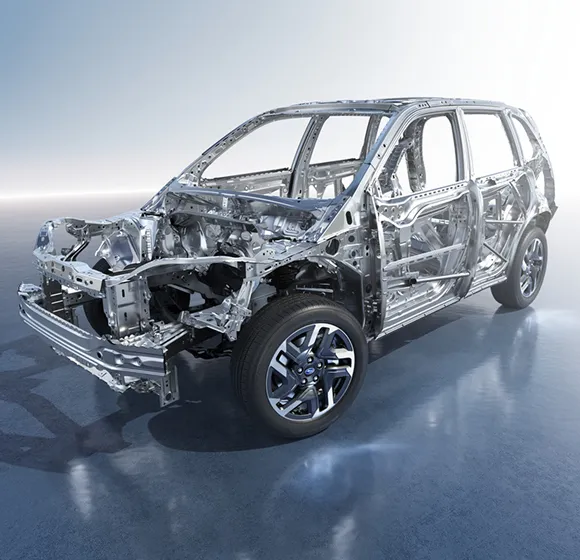
A rigid body is perhaps the most important factor that is regularly overlooked. Car bodies with insufficient rigidity suffer from shaking throughout the frame when driving over gaps or cornering, resulting in unpredictable, unreliable behaviour. SUBARU uses bodies built with the new Ring-Shaped Reinforcement Frames concept, giving the driver faithful response and reliable drivability.
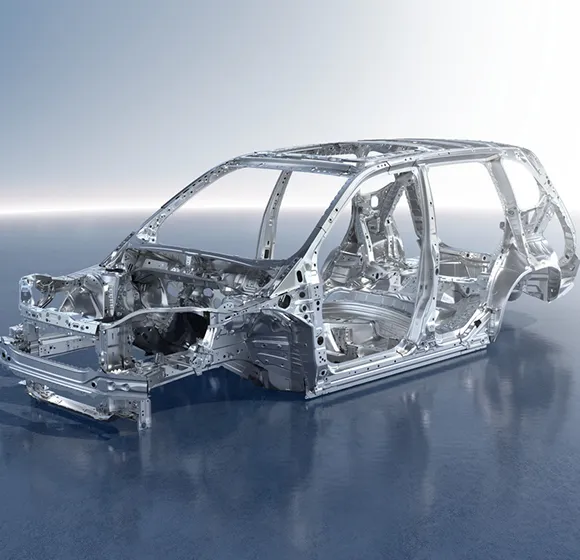
The front suspension features a longer stroke design to allow the car to better follow contours in the road surface. This provides better driving stability and outstanding steering response. The next-generation rear suspension keeps tyres firmly perpendicular against the road surface, and absorbs shocks in a steady manner. Both front and rear suspension systems support each other for safe, reliable drivability and supreme ride comfort.
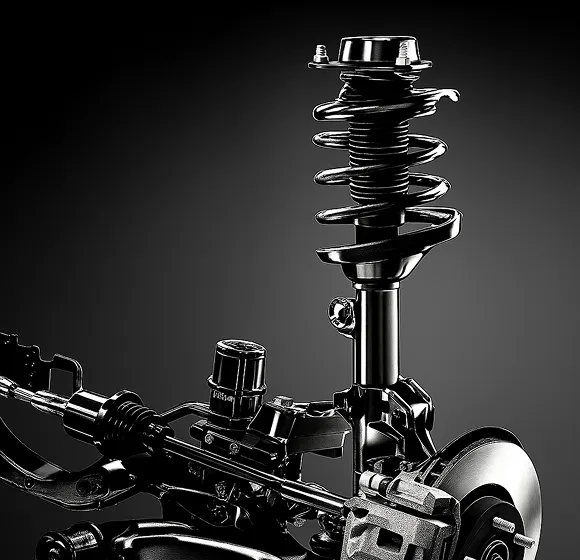
The extreme performance that this superior weight balance provides works with the outstanding traction of AWD to limit the chassis rolling and pitching, which occur driving around corners or braking, for maximum stability at all times. The resulting chassis rocks less and ride comfort is increased, making the journey enjoyable for all passengers.
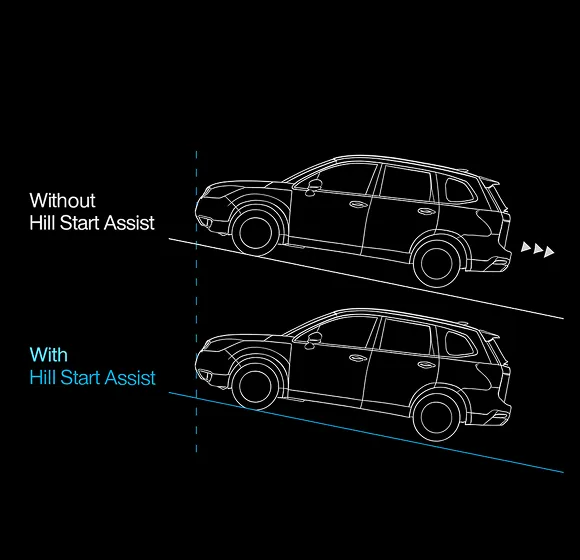
The Hill Start Assist function is a driver assist system that keeps the car steady when taking off uphill. Brake pressure is retained for approximately one second when taking off uphill to prevent the car from rolling backwards when shifting from the brake pedal to the accelerator.
Imagine being able to drive into a slippery corner on a snowy or rainy day without unpredictable car movement, turn exactly as intended through the corner, and head out of the corner smoothly. SUBARU includes a number of functions that make smooth cornering a reality.
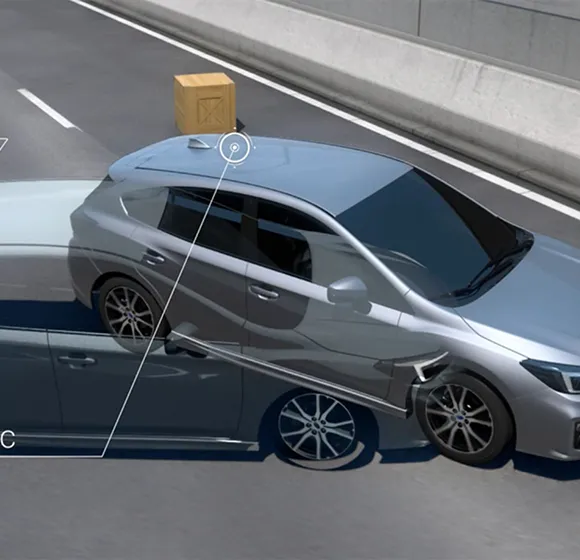
Vehicle Dynamics Control is an electronic device that prevents the car from skidding when it experiences a loss in stability by constantly monitoring driving conditions from the steering angle, engine speed, gear selection and the brake position. It controls the brakes at each corner if the car starts behaving erratically, and is effective when the car is about to slip slideways when cornering.
Subaru improved the primary system of VDC in accordance with improving the suspension of BRZ. Track Mode is the function to delay the timing of VDC’s intervention to prioritize the driver’s control more than that of normal mode. The movement of vehicle when VDC works is also controlled by making the control of intervention smoother, thereby everyone can enjoy sporty drive safely with this mode.
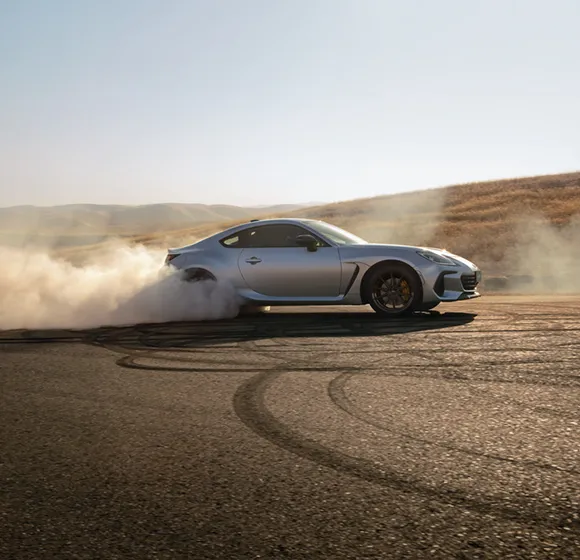
A new function that takes risk aversion capabilities a step further. When navigating a corner, VDC applies brakes to the inner front wheel to provide optimum drive power relative to the outer wheel. The outer tyres turn smoother, which in turn increases steering capability. The car responds faithfully to the driver’s steering input, which helps avoid objects on the road or danger when needed.
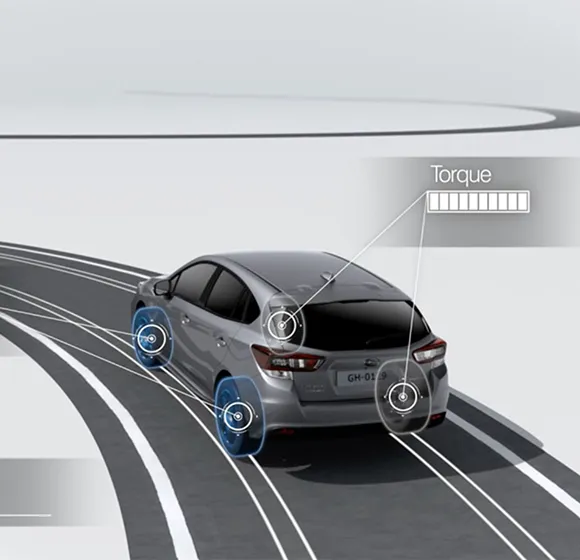
Braking performance is directly related to a car’s safety and risk aversion capabilities. The key focus for SUBARU is peace of mind, and to achieve this, the brakes have been designed to respond quickly when applying them on almost any type of road.
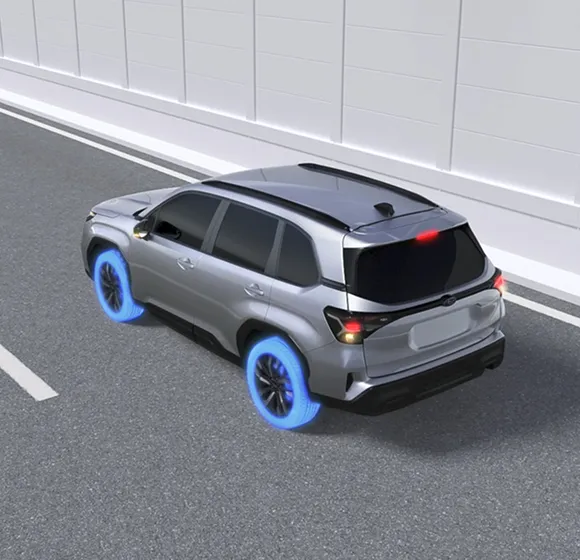
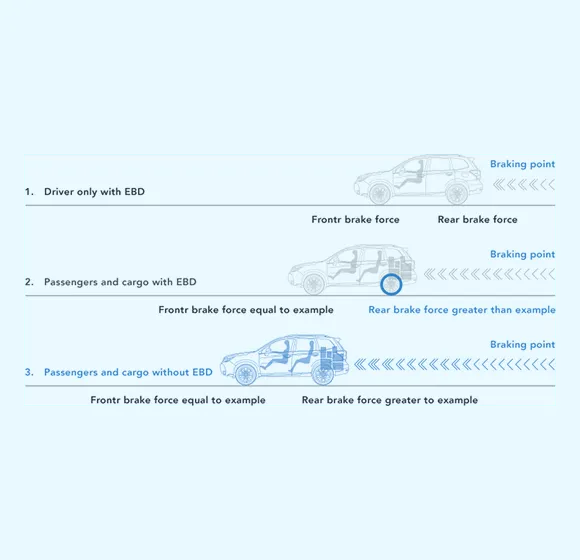
Electric Brake-force Distribution is a system that distributes braking power at an optimum rate between the front and rear wheels to suit driving conditions. The front and rear wheels rotate at a different rate depending on how the car is driven and its weight. The system detects these changes, and distributes braking power to certain wheels to suit driving conditions for more reliable braking.
During emergency braking conditions, the majority of drivers are unable to apply sufficient brake pressure, which often makes collisions worse than they might have been. The Brake Assist function assists the driver in pressing the brake pedal to prevent these situations from occurring. The speed at which the brake pedal is pressed, and the force that is applied are detected to determine whether emergency braking assistance is required, and if so brake pressure is increased automatically.
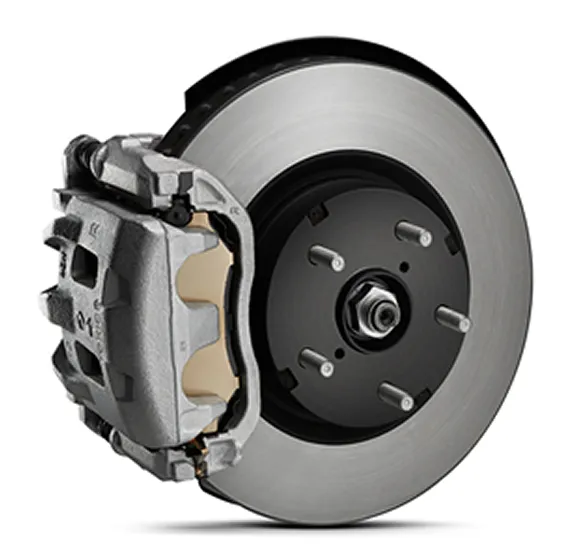
If the driver accidentally presses both the accelerator pedal and brake pedal at the same time, the system limits engine output and applies the brakes first and foremost. This is effective in preventing accidents if the driver presses the wrong pedal.
Outstanding traction and reliable drivability with the Symmetrical AWD system, and suspension with excellent control capabilities for car behavior that the driver expects. A highly-rigid and lightweight body for surefooted driving and higher levels of risk avoidance. The Hill-start Assist function also helps to reduce driver fatigue while on the road.
A rigid body is perhaps the most important factor that is regularly overlooked. Car bodies with insufficient rigidity suffer from shaking throughout the frame when driving over gaps or cornering, resulting in unpredictable, unreliable behaviour. SUBARU uses bodies built with the new Ring-Shaped Reinforcement Frames concept, giving the driver faithful response and reliable drivability.
The front suspension features a longer stroke design to allow the car to better follow contours in the road surface. This provides better driving stability and outstanding steering response. The next-generation rear suspension keeps tyres firmly perpendicular against the road surface, and absorbs shocks in a steady manner. Both front and rear suspension systems support each other for safe, reliable drivability and supreme ride comfort.
The extreme performance that this superior weight balance provides works with the outstanding traction of AWD to limit the chassis rolling and pitching, which occur driving around corners or braking, for maximum stability at all times. The resulting chassis rocks less and ride comfort is increased, making the journey enjoyable for all passengers.
The Hill Start Assist function is a driver assist system that keeps the car steady when taking off uphill. Brake pressure is retained for approximately one second when taking off uphill to prevent the car from rolling backwards when shifting from the brake pedal to the accelerator.
Imagine being able to drive into a slippery corner on a snowy or rainy day without unpredictable car movement, turn exactly as intended through the corner, and head out of the corner smoothly. SUBARU includes a number of functions that make smooth cornering a reality.
Vehicle Dynamics Control is an electronic device that prevents the car from skidding when it experiences a loss in stability by constantly monitoring driving conditions from the steering angle, engine speed, gear selection and the brake position. It controls the brakes at each corner if the car starts behaving erratically, and is effective when the car is about to slip slideways when cornering.
Subaru improved the primary system of VDC in accordance with improving the suspension of BRZ. Track Mode is the function to delay the timing of VDC’s intervention to prioritize the driver’s control more than that of normal mode. The movement of vehicle when VDC works is also controlled by making the control of intervention smoother, thereby everyone can enjoy sporty drive safely with this mode.
A new function that takes risk aversion capabilities a step further. When navigating a corner, VDC applies brakes to the inner front wheel to provide optimum drive power relative to the outer wheel. The outer tyres turn smoother, which in turn increases steering capability. The car responds faithfully to the driver’s steering input, which helps avoid objects on the road or danger when needed.
Braking performance is directly related to a car’s safety and risk aversion capabilities. The key focus for SUBARU is peace of mind, and to achieve this, the brakes have been designed to respond quickly when applying them on almost any type of road.
Electric Brake-force Distribution is a system that distributes braking power at an optimum rate between the front and rear wheels to suit driving conditions. The front and rear wheels rotate at a different rate depending on how the car is driven and its weight. The system detects these changes, and distributes braking power to certain wheels to suit driving conditions for more reliable braking.
During emergency braking conditions, the majority of drivers are unable to apply sufficient brake pressure, which often makes collisions worse than they might have been. The Brake Assist function assists the driver in pressing the brake pedal to prevent these situations from occurring. The speed at which the brake pedal is pressed, and the force that is applied are detected to determine whether emergency braking assistance is required, and if so brake pressure is increased automatically.
If the driver accidentally presses both the accelerator pedal and brake pedal at the same time, the system limits engine output and applies the brakes first and foremost. This is effective in preventing accidents if the driver presses the wrong pedal.
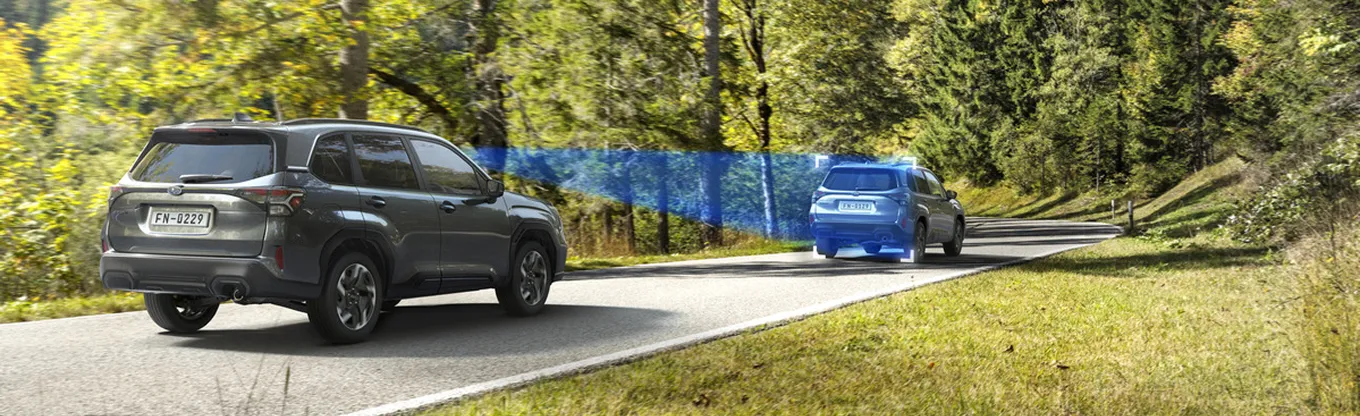
Vehicles in the video may include vehicles with options, development vehicles, old model vehicles, dummy vehicles, other models, etc.
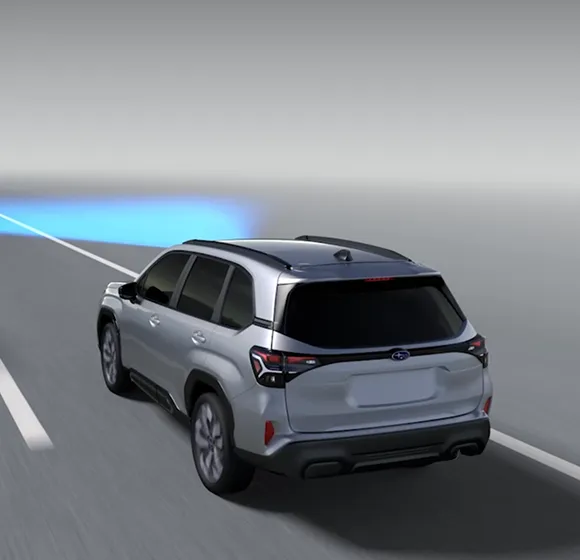
Vehicles in the video may include vehicles with options, development vehicles, old model vehicles, dummy vehicles, other models, etc.
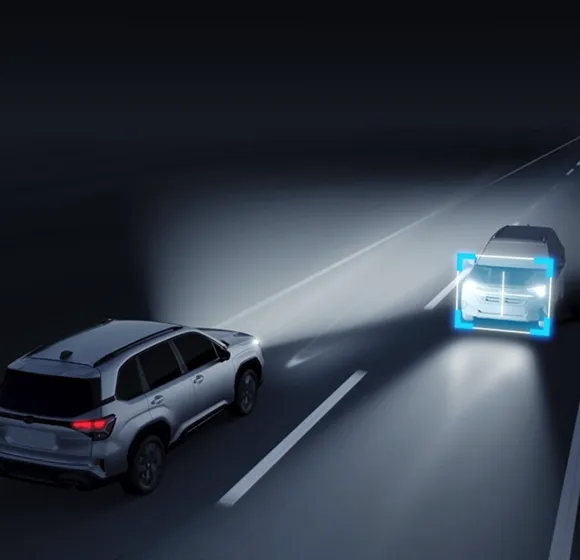
Vehicles in the video may include vehicles with options, development vehicles, old model vehicles, dummy vehicles, other models, etc.
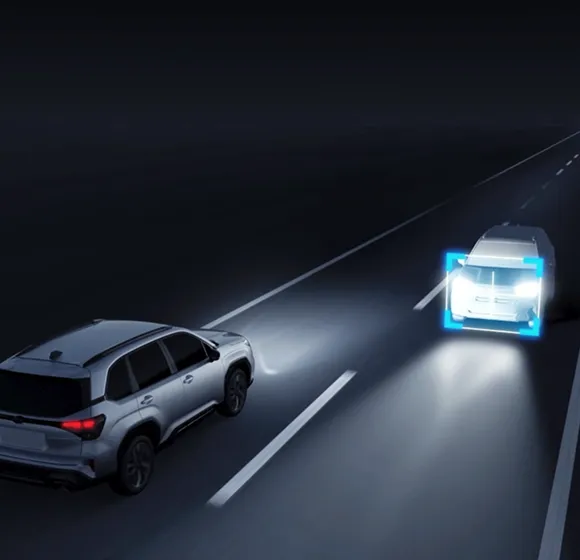
Vehicles in the video may include vehicles with options, development vehicles, old model vehicles, dummy vehicles, other models, etc.
Vehicles in the video may include vehicles with options, development vehicles, old model vehicles, dummy vehicles, other models, etc.
Vehicles in the video may include vehicles with options, development vehicles, old model vehicles, dummy vehicles, other models, etc.
Vehicles in the video may include vehicles with options, development vehicles, old model vehicles, dummy vehicles, other models, etc.
Vehicles in the video may include vehicles with options, development vehicles, old model vehicles, dummy vehicles, other models, etc.
Vehicles in the video may include vehicles with options, development vehicles, old model vehicles, dummy vehicles, other models, etc.
Vehicles in the video may include vehicles with options, development vehicles, old model vehicles, dummy vehicles, other models, etc.
Vehicles in the video may include vehicles with options, development vehicles, old model vehicles, dummy vehicles, other models, etc.
Vehicles in the video may include vehicles with options, development vehicles, old model vehicles, dummy vehicles, other models, etc.
Vehicles in the video may include vehicles with options, development vehicles, old model vehicles, dummy vehicles, other models, etc.
Vehicles in the video may include vehicles with options, development vehicles, old model vehicles, dummy vehicles, other models, etc.
Vehicles in the video may include vehicles with options, development vehicles, old model vehicles, dummy vehicles, other models, etc.
Vehicles in the video may include vehicles with options, development vehicles, old model vehicles, dummy vehicles, other models, etc.
Vehicles in the video may include vehicles with options, development vehicles, old model vehicles, dummy vehicles, other models, etc.
Vehicles in the video may include vehicles with options, development vehicles, old model vehicles, dummy vehicles, other models, etc.
Vehicles in the video may include vehicles with options, development vehicles, old model vehicles, dummy vehicles, other models, etc.
Vehicles in the video may include vehicles with options, development vehicles, old model vehicles, dummy vehicles, other models, etc.

Since embarking on the business of car production, SUBARU has above all else focused on development of “safety technology” to provide protection against collisions. SUBARU cars incorporate numerous technologies designed to protect passengers, as well as the lives of pedestrians, in the event of a collision. Designing every aspect of the car with the aim of guaranteeing utmost safety is a collision safety concept that is unique to SUBARU and evidenced with features such as the “Ring-Shaped Reinforcement Frames body” to protect against collisions, or the engine layout that protects passengers from shocks in the event of a crash.
The heart of all-around safety
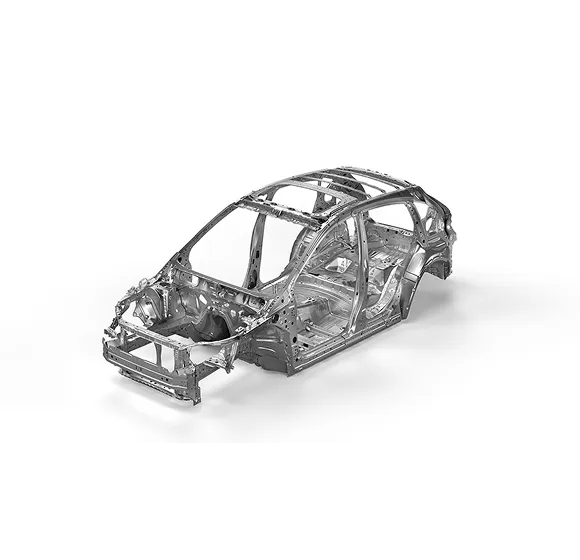
The design of this body features a ring structure connecting the left and right A, B and C pillars via the roof and floor, combined with strengthened side rails and side sills linking the side of the body to create a cage that envelopes the central cabin. This design absorbs shocks efficiently from any direction in the event of an accident, providing the cabin with solid protection.
The symmetrical layout of the Symmetrical AWD + BOXER platform protects passengers from shocks by effectively utilising the entire chassis structure as a crushable zone in the event of a collision. Every component within the cabin has been designed with safety first and manufactured with shock absorbing materials to protect the delicate human body.
This concept stems from the fact that even the smallest piece of equipment can become a hazard if subjected to the high collision energies of a collision. Safety pedals and a seat shape that reduces injury due to whiplash during a rear-end collision have also been used.
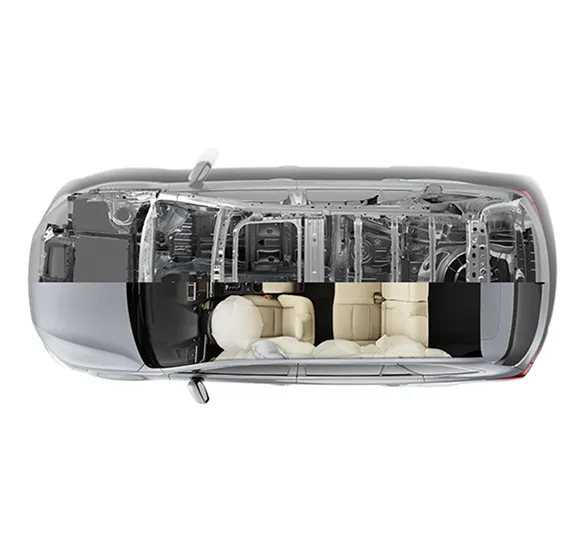
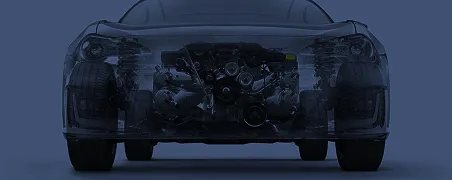
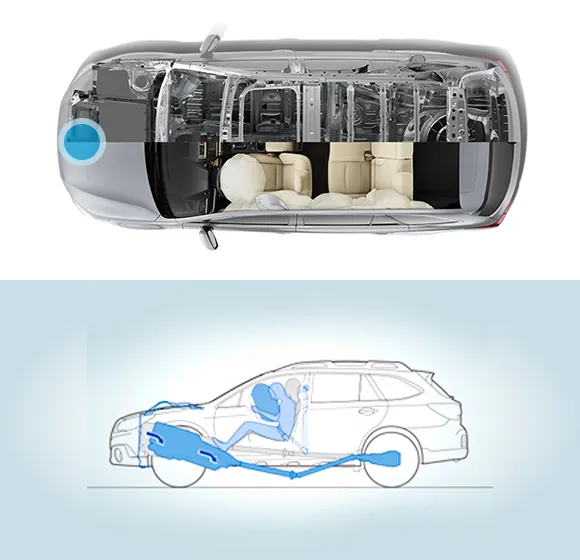
Subaru cars have traditionally been powered by the Horizontally-Opposed SUBARU BOXER Engine. With an inherently low centre of gravity, the engine allows the transmission and other components in the drivetrain to be positioned in a straight, symmetrical line. This design allows the engine to “submarine” – or slide – under the floor during a frontal collision, and has been proven to be much safer than other engines, where the transmission and other drivetrain components are often pushed into the cabin during a collision.
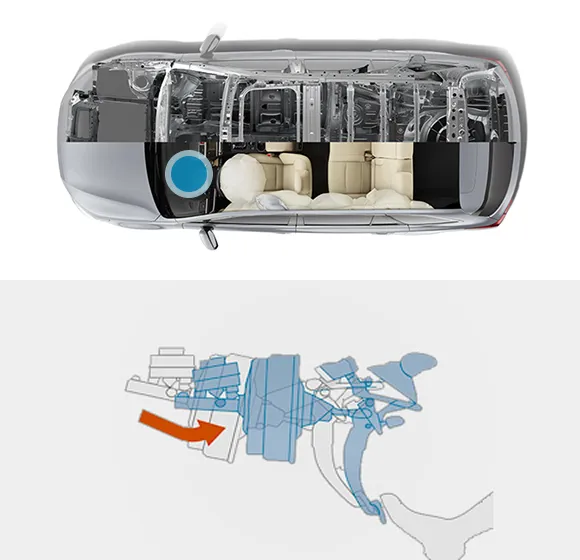
If the car is involved in frontal collision, the car’s pedals often move backward, causing injuries to the driver’s leg. All Subaru cars employ auto-retracting pedals to minimise this type of injury. Brake pedals are retracted with the use of a catch and shock absorbing clutch pedals (MT models) limit changes in pedal position. Footrests (AT models) also use shock absorbing material to reduce injury to the driver’s feet.
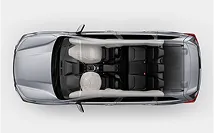
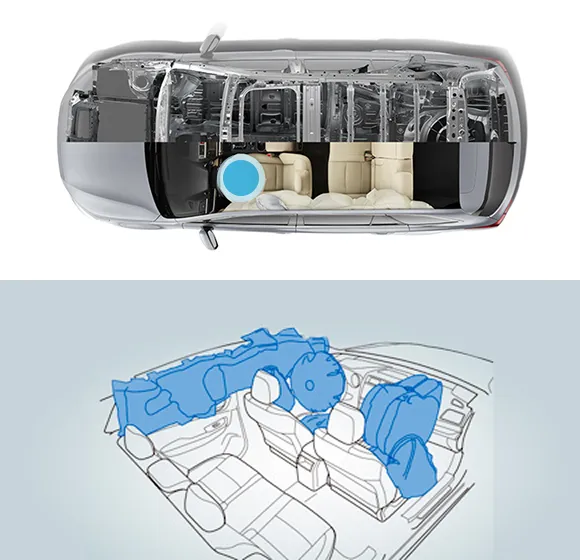
The driver’s seat and passenger’s seat SRS airbags work in tandem with seatbelts to protect passengers. These are folded into a compact size and stored within the steering wheel and dashboard, and inflate instantaneously to form airbags during a collision, providing added protection for the passengers.
The front seat seatbelts of Subaru cars have a number of features for added safety. The pretensioner tightens the seatbelt instantaneously during a collision, holding passengers more firmly in their seats. The load limiter maintains tension in the seatbelt, reducing injury to the passenger’s chest. And the seatbelt adjuster changes the position of the shoulder strap to suit different body sizes.
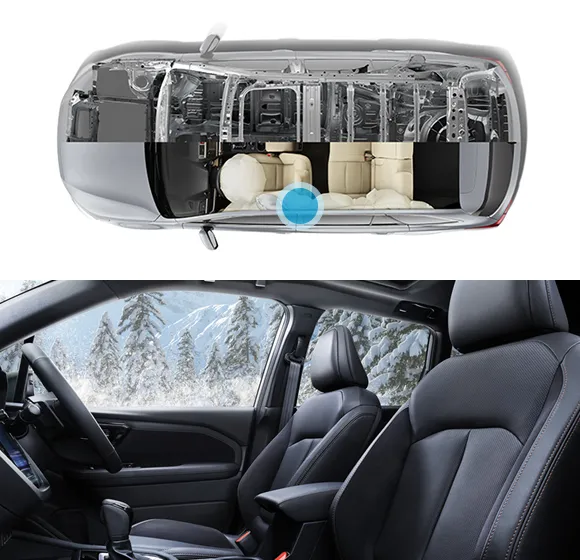
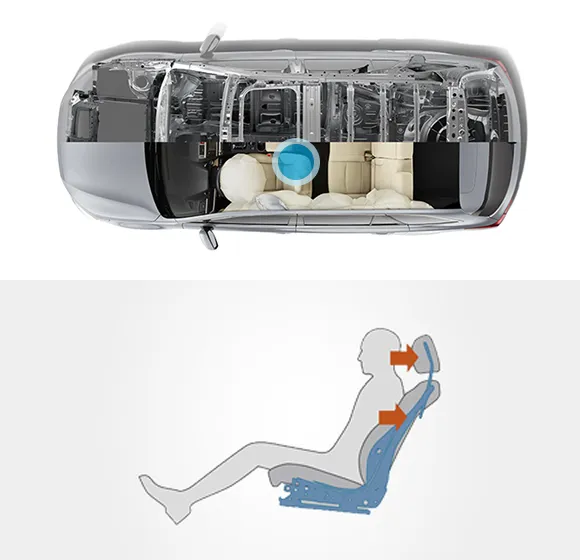
Seats play an extremely important role in protecting passengers during a rear-end collision. Standard front seats in Subaru cars incorporate mechanisms to reduce these shocks in three ways: (1) Active headrests to hold the head firmly. (2) Absorb shocks to the head using energy absorbing headrests with a dual layer internal structure, thus minimising neck whiplash. (3) The entire seatback absorbs the shock that throws passengers backwards, minimising the shock transmitted to passengers.Shock absorbing materials have also been used for the ceiling and other cabin surfaces to reduce the shock transferred to the heads of passengers during a collision.
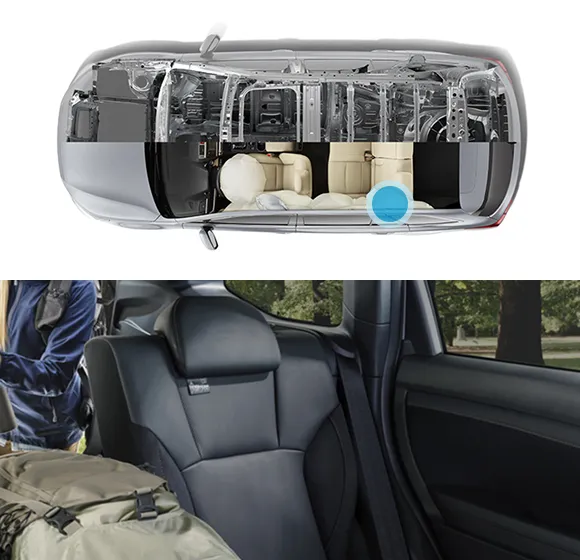
All rear seats in Subaru cars use three-point seatbelts to firmly hold the waist and chest area of passengers. All retractors feature a child seat (ALR) mechanism.
SUBARUs have rigid side door beams installed within doors on either side of the car to protect passengers during a side collision. The high level of rigidity afforded by the Ring-Shaped Reinforcement Frames body protects the entire cabin space in the event of a collision or roll-over. The addition of front side SRS airbags/curtain SRS airbags and use of shock absorbing materials throughout the interior help to protect the head and body of passengers in a cabin entirely designed to reduce collision shocks.
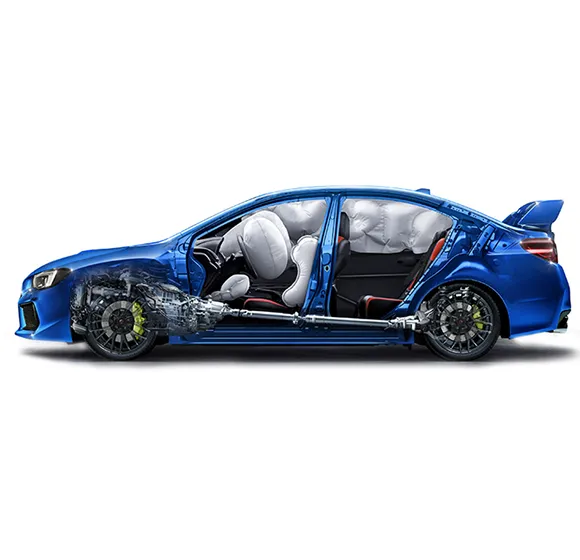
Subaru cars have traditionally been powered by the Horizontally-Opposed SUBARU BOXER Engine. With an inherently low centre of gravity, the engine allows the transmission and other components in the drivetrain to be positioned in a straight, symmetrical line. This design allows the engine to “submarine” – or slide – under the floor during a frontal collision, and has been proven to be much safer than other engines, where the transmission and other drivetrain components are often pushed into the cabin during a collision. Related: The SUBARU BOXER Engine
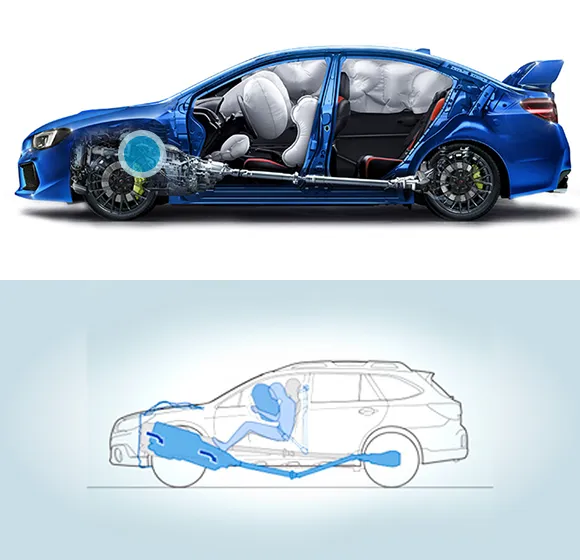
If the car is involved in frontal collision, the car’s pedals often move backward, causing injuries to the driver’s leg. All Subaru cars employ auto-retracting pedals to minimise this type of injury. Brake pedals are retracted with the use of a catch and shock absorbing clutch pedals (MT models) limit changes in pedal position. Footrests (AT models) also use shock absorbing material to reduce injury to the driver’s feet.
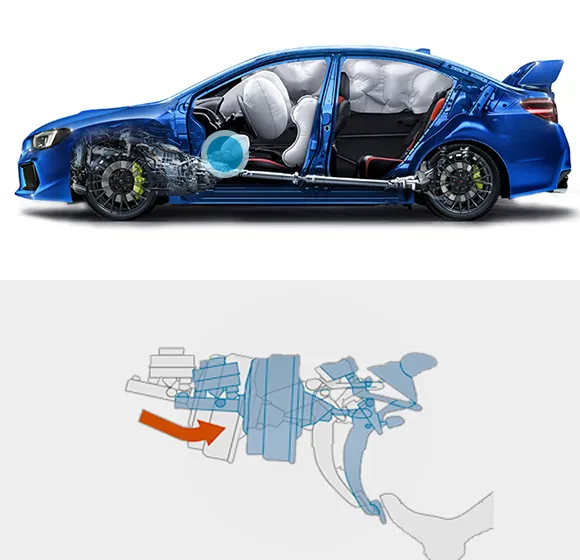
The driver’s seat and passenger’s seat SRS airbags work in tandem with seatbelts to protect passengers. These are folded into a compact size and stored within the steering wheel and dashboard, and inflate instantaneously to form airbags during a collision, providing added protection for the passengers.
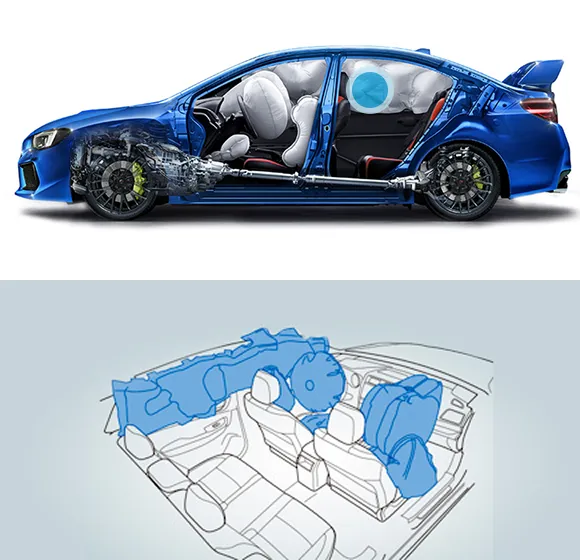
The front seat seatbelts of Subaru cars have a number of features for added safety. The pretensioner tightens the seatbelt instantaneously during a collision, holding passengers more firmly in their seats. The load limiter maintains tension in the seatbelt, reducing injury to the passenger’s chest. And the seatbelt adjuster changes the position of the shoulder strap to suit different body sizes.
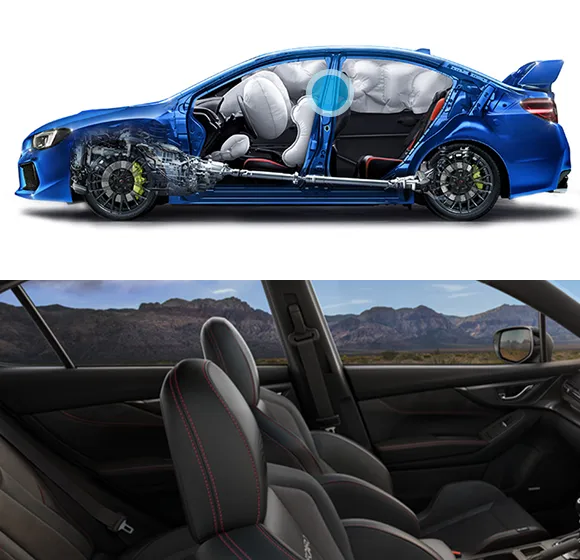
One of the characteristics of the BOXER engine is its low structural profile. This allows space to be incorporated under the bonnet to absorb shocks if a pedestrian is thrown up onto the car, where they might have a high risk of sustaining head injury. Even the hinges and bonnet gas dampers are designed to reduce shocks, and the front bumper features a structure that absorbs collision energy as these can often hit the legs of pedestrians. These are just some of the ways that SUBARU has designed every facet of its cars to protect its passengers, as well as to make pedestrians and others safer.
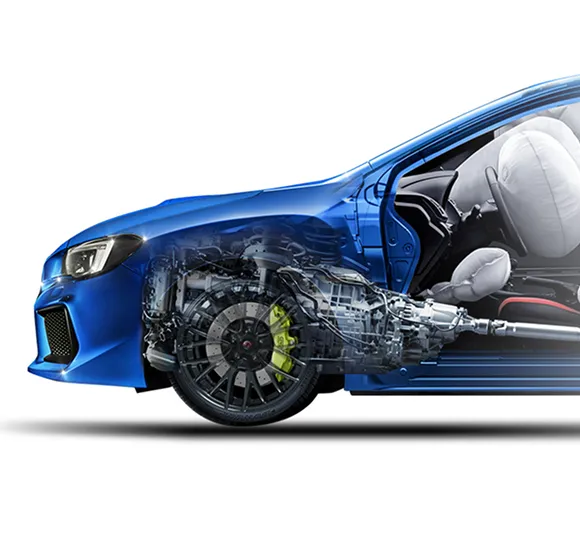
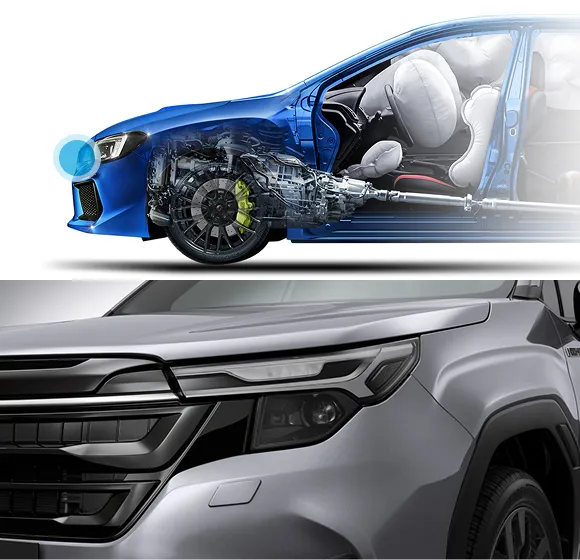
A shock absorbing structure has been used around the front bumper area, which has the highest probability of striking against the legs of pedestrians during an accident. This feature absorbs collision energy that would otherwise be transmitted to the pedestrian’s legs, thereby protecting their knee joints and other body parts from potential injury.
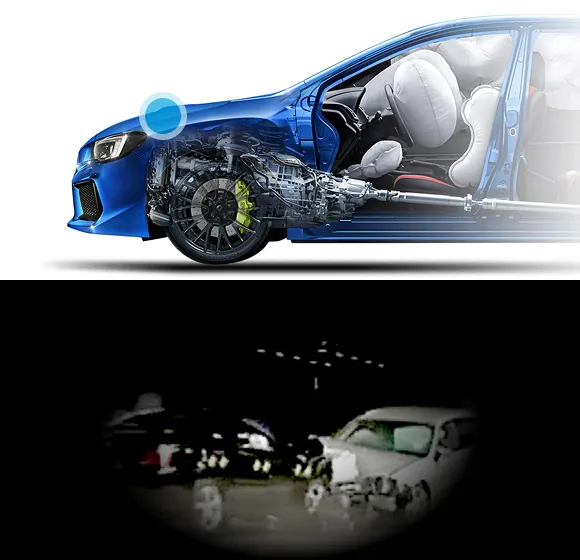
In an accident involving two cars, the smaller or lighter of the two usually sustains more damage during the collision. Subaru has taken a broad stance for developing cars to ensure an adequate level of safety towards the other car with an efficient, shock absorbing frame, while providing a solid cabin with which to protect its occupants, holding them firmly in place with fail-safe safety restraints.
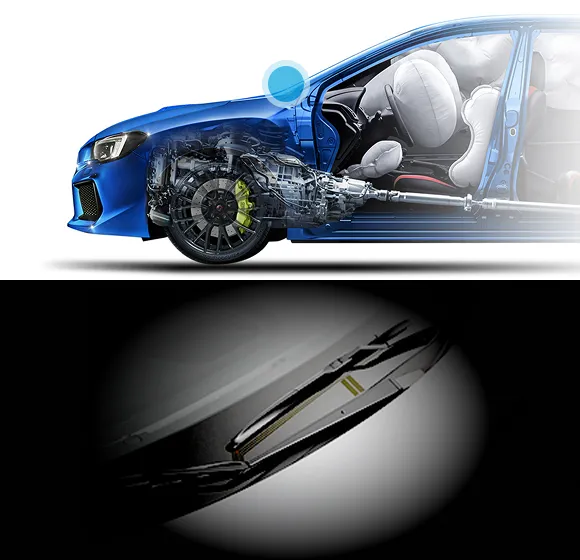
The front wipers are designed so that the wiper shafts detach when subjected to shock. With this modular layout, injury to pedestrians from the wiper ends is minimised in the event that a pedestrian is thrown on top of the car’s bonnet.
Subaru safety assessments around the world
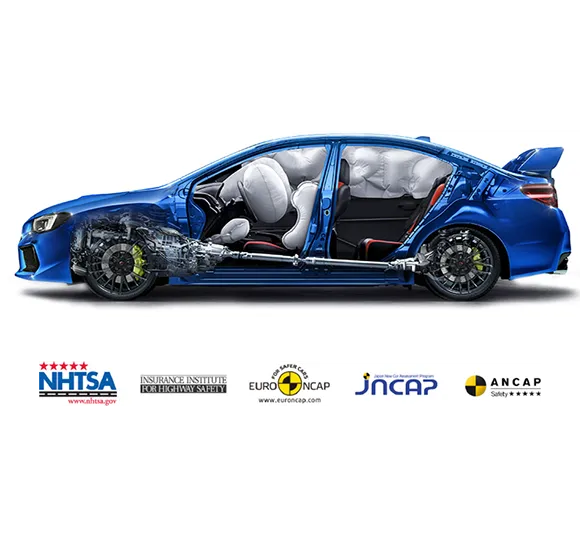
Since embarking on the business of car production, SUBARU has above all else focused on development of “safety technology” to provide protection against collisions. SUBARU cars incorporate numerous technologies designed to protect passengers, as well as the lives of pedestrians, in the event of a collision. Designing every aspect of the car with the aim of guaranteeing utmost safety is a collision safety concept that is unique to SUBARU and evidenced with features such as the “Ring-Shaped Reinforcement Frames body” to protect against collisions, or the engine layout that protects passengers from shocks in the event of a crash.
The heart of all-around safety
The design of this body features a ring structure connecting the left and right A, B and C pillars via the roof and floor, combined with strengthened side rails and side sills linking the side of the body to create a cage that envelopes the central cabin. This design absorbs shocks efficiently from any direction in the event of an accident, providing the cabin with solid protection.
The symmetrical layout of the Symmetrical AWD + BOXER platform protects passengers from shocks by effectively utilising the entire chassis structure as a crushable zone in the event of a collision. Every component within the cabin has been designed with safety first and manufactured with shock absorbing materials to protect the delicate human body.
This concept stems from the fact that even the smallest piece of equipment can become a hazard if subjected to the high collision energies of a collision. Safety pedals and a seat shape that reduces injury due to whiplash during a rear-end collision have also been used.
Subaru cars have traditionally been powered by the Horizontally-Opposed SUBARU BOXER Engine. With an inherently low centre of gravity, the engine allows the transmission and other components in the drivetrain to be positioned in a straight, symmetrical line. This design allows the engine to “submarine” – or slide – under the floor during a frontal collision, and has been proven to be much safer than other engines, where the transmission and other drivetrain components are often pushed into the cabin during a collision.
If the car is involved in frontal collision, the car’s pedals often move backward, causing injuries to the driver’s leg. All Subaru cars employ auto-retracting pedals to minimise this type of injury. Brake pedals are retracted with the use of a catch and shock absorbing clutch pedals (MT models) limit changes in pedal position. Footrests (AT models) also use shock absorbing material to reduce injury to the driver’s feet.
The driver’s seat and passenger’s seat SRS airbags work in tandem with seatbelts to protect passengers. These are folded into a compact size and stored within the steering wheel and dashboard, and inflate instantaneously to form airbags during a collision, providing added protection for the passengers.
The front seat seatbelts of Subaru cars have a number of features for added safety. The pretensioner tightens the seatbelt instantaneously during a collision, holding passengers more firmly in their seats. The load limiter maintains tension in the seatbelt, reducing injury to the passenger’s chest. And the seatbelt adjuster changes the position of the shoulder strap to suit different body sizes.
Seats play an extremely important role in protecting passengers during a rear-end collision. Standard front seats in Subaru cars incorporate mechanisms to reduce these shocks in three ways: (1) Active headrests to hold the head firmly. (2) Absorb shocks to the head using energy absorbing headrests with a dual layer internal structure, thus minimising neck whiplash. (3) The entire seatback absorbs the shock that throws passengers backwards, minimising the shock transmitted to passengers.Shock absorbing materials have also been used for the ceiling and other cabin surfaces to reduce the shock transferred to the heads of passengers during a collision.
All rear seats in Subaru cars use three-point seatbelts to firmly hold the waist and chest area of passengers. All retractors feature a child seat (ALR) mechanism.
SUBARUs have rigid side door beams installed within doors on either side of the car to protect passengers during a side collision. The high level of rigidity afforded by the Ring-Shaped Reinforcement Frames body protects the entire cabin space in the event of a collision or roll-over. The addition of front side SRS airbags/curtain SRS airbags and use of shock absorbing materials throughout the interior help to protect the head and body of passengers in a cabin entirely designed to reduce collision shocks.
Subaru cars have traditionally been powered by the Horizontally-Opposed SUBARU BOXER Engine. With an inherently low centre of gravity, the engine allows the transmission and other components in the drivetrain to be positioned in a straight, symmetrical line. This design allows the engine to “submarine” – or slide – under the floor during a frontal collision, and has been proven to be much safer than other engines, where the transmission and other drivetrain components are often pushed into the cabin during a collision. Related: The SUBARU BOXER Engine
If the car is involved in frontal collision, the car’s pedals often move backward, causing injuries to the driver’s leg. All Subaru cars employ auto-retracting pedals to minimise this type of injury. Brake pedals are retracted with the use of a catch and shock absorbing clutch pedals (MT models) limit changes in pedal position. Footrests (AT models) also use shock absorbing material to reduce injury to the driver’s feet.
The driver’s seat and passenger’s seat SRS airbags work in tandem with seatbelts to protect passengers. These are folded into a compact size and stored within the steering wheel and dashboard, and inflate instantaneously to form airbags during a collision, providing added protection for the passengers.
The front seat seatbelts of Subaru cars have a number of features for added safety. The pretensioner tightens the seatbelt instantaneously during a collision, holding passengers more firmly in their seats. The load limiter maintains tension in the seatbelt, reducing injury to the passenger’s chest. And the seatbelt adjuster changes the position of the shoulder strap to suit different body sizes.
One of the characteristics of the BOXER engine is its low structural profile. This allows space to be incorporated under the bonnet to absorb shocks if a pedestrian is thrown up onto the car, where they might have a high risk of sustaining head injury. Even the hinges and bonnet gas dampers are designed to reduce shocks, and the front bumper features a structure that absorbs collision energy as these can often hit the legs of pedestrians. These are just some of the ways that SUBARU has designed every facet of its cars to protect its passengers, as well as to make pedestrians and others safer.
A shock absorbing structure has been used around the front bumper area, which has the highest probability of striking against the legs of pedestrians during an accident. This feature absorbs collision energy that would otherwise be transmitted to the pedestrian’s legs, thereby protecting their knee joints and other body parts from potential injury.
In an accident involving two cars, the smaller or lighter of the two usually sustains more damage during the collision. Subaru has taken a broad stance for developing cars to ensure an adequate level of safety towards the other car with an efficient, shock absorbing frame, while providing a solid cabin with which to protect its occupants, holding them firmly in place with fail-safe safety restraints.
The front wipers are designed so that the wiper shafts detach when subjected to shock. With this modular layout, injury to pedestrians from the wiper ends is minimised in the event that a pedestrian is thrown on top of the car’s bonnet.
Subaru safety assessments around the world
Subaru difference