



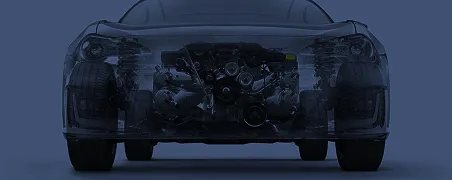



Subaru firmly believes that the Horizontally-Opposed Engine is the optimum design for driving enjoyment. The pistons face away from each other in a 180º symmetrical layout around the crankshaft and work to balance out each other’s vibrations, delivering a smooth, shudder-free feel. This is because the engine can rotate freely at any given speed, delivering heart-gripping response to the driver. The length and height of this engine layout can be kept shorter than a traditional in-line engine, and it is also lighter.
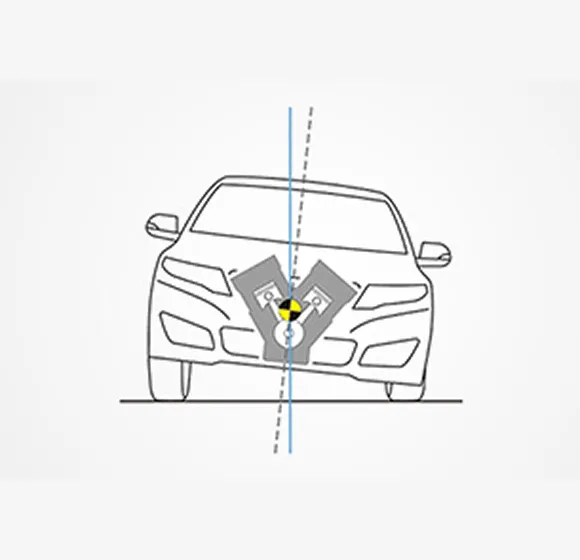
The engine can be mounted lower in the vehicle than other engines, and weight balance on the left and right can be made almost exactly the same. In this design, the low centre of gravity engine lowers the centre of gravity of the entire car. Similarly, a symmetrically balanced engine increases the symmetrical balance of the entire car. Both of these aspects combine to deliver a safer, more stable, and ultimately, more enjoyable experience on the road.
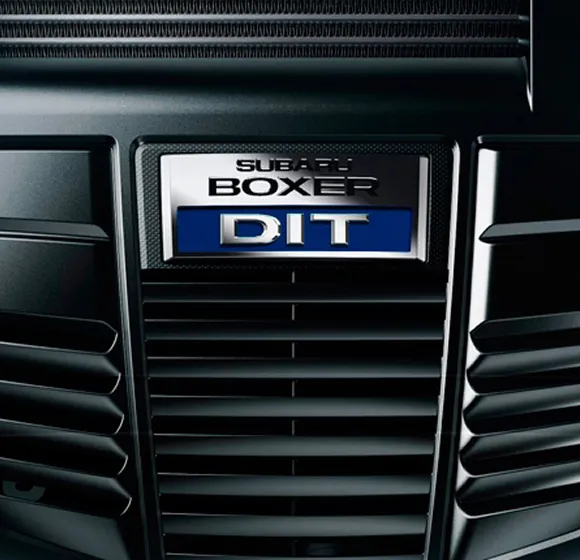
A boxer engine, or a horizontally opposed engine, is an engine configuration in which its pistons move toward each other in a horizontal direction. Subaru has been committed to the SUBARU BOXER engine for over 50 years for its many advantages over other engine types, providing durability and reliable performance in its vehicles.
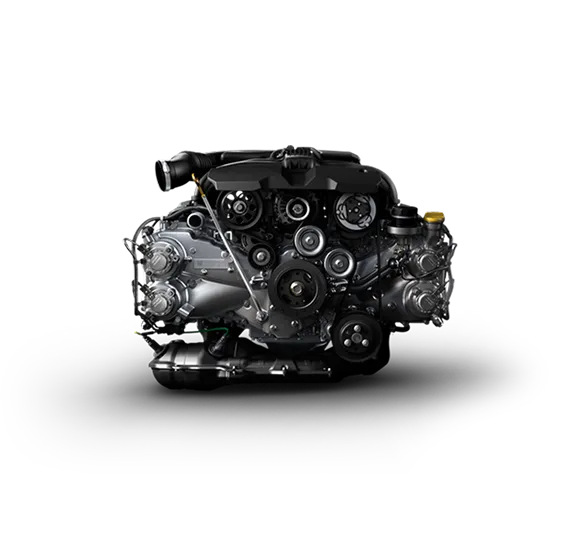
Since the Horizontally-Opposed Engine is structured with the pistons mounted horizontally, it has a lower total height and is more compact and lighter than an in-line engine or a V engine. This allows for level cornering and more stable high-speed driving, thereby helping to realize the SUBARU ideal of enhanced driving safety.
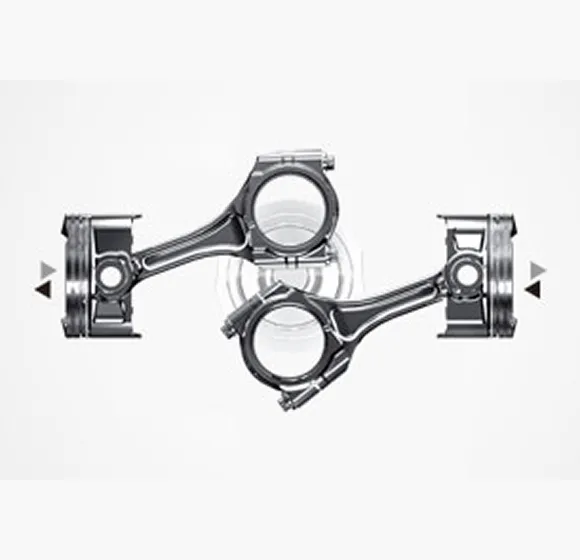
The pistons in an in-line engine or a V engine generally move vertically. However, in the Horizontally-Opposed Engine, the opposed pistons move horizontally and the opposing forces cancel each other out, thereby reducing the amount of vibration and providing a more comfortable feel to the engine.
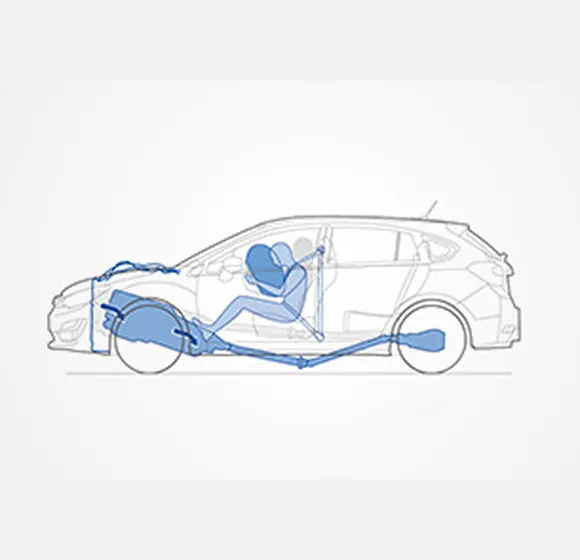
In the event of a head-on collision, the Subaru Boxer Engine and gearbox are designed to slide beneath the cabin for your protection. Related: Passive Safety
The ultra-low center of gravity packaging is the result of pursuing the advantages of the low center of gravity offered by the horizontally opposed Subaru Boxer engine to their limits. The Boxer engine, which had a low center of gravity to begin with, has been made lower and mounted closer to the center of the vehicle to truly lower the center of gravity of the vehicle overall.
This previously unheard of endeavor and innovation resulted in a gravitational center height that rivals that of super sports cars, excellent front and rear weight distribution and a new dimension of driving that has never been experienced before. The expertise in horizontally opposed engines, technology and passion for driving cultivated at Subaru have all been poured into this ultra-low center of gravity packaging.
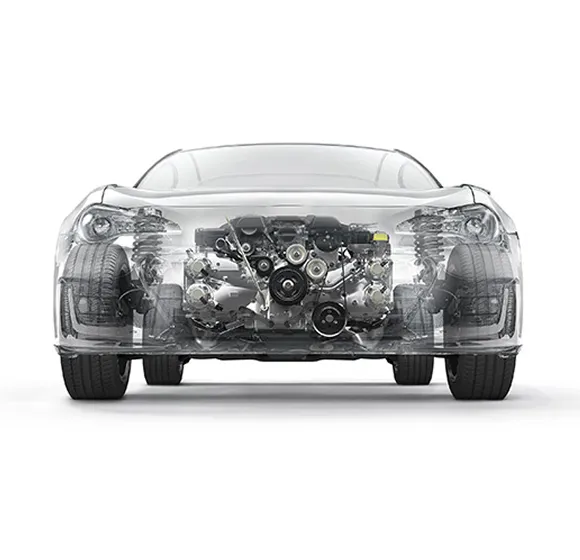
Most sports cars make adjustments in the suspension system to ensure roll stiffness. In contrast, ultra-low center of gravity packaging has been achieved by pursuing the potential of the Boxer engine and the vehicle itself rather than unnecessarily tightening the suspension. This packaging makes it possible to enjoy excellent handling with little roll, instability, bumps and vibrations for a smooth and comfortable ride.

Load shift reduces postural changes, making it possible to achieve both gentle motion and steering response. This ultra-low center of gravity packaging has achieved a gravitational center height of 460 mm*1, among the top class in the world*2. This provides drivers with handling that has excellent response and a comfortable ride for all.
*1 In-house measurements *2 As of February 2012 (in-house research)
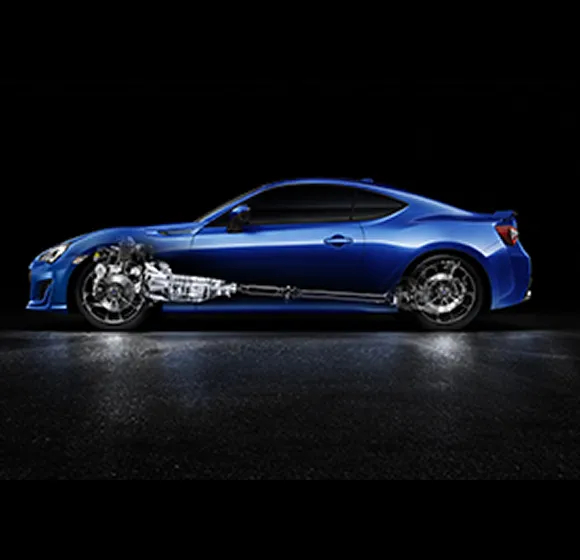
Better contact with the road surface, little roll, and fast convergence afforded by a low center of gravity create a sensation of the vehicle adhering to the road. The excellent front and rear weight distribution of 53:47* produces a direct response to steering. The enjoyment of this completely new handling can be experienced not only in limited settings such as circuits, but by anybody driving on public highways or roads with even slight curves. This is the attraction of ultra-low center of gravity packaging.
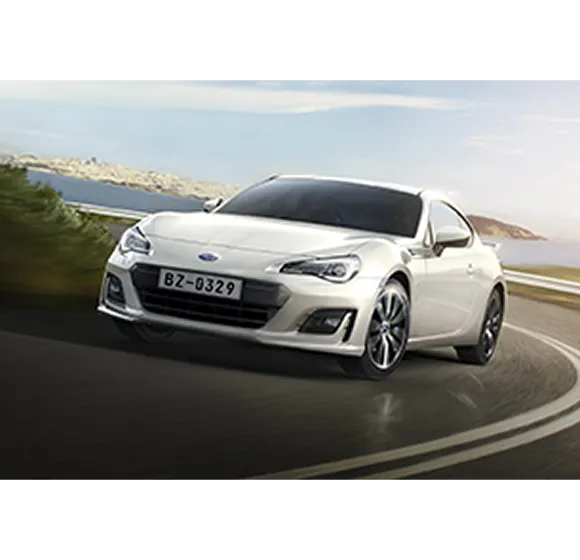
- The shapes of auxiliary equipment have been completely rethought to give the engine the lowest center of gravity possible.
- The driving position has been set at the lowest possible position to lower the center of gravity of the entire vehicle.
- A lightweight and highly rigid chassis has been specially designed to improve stability.
- Uses an FR layout and the pleasure of unembellished handling has been pursued to the utmost limit.
- A light yet strong body structure that ensures optimal performance for the front, rear and cabin has been developed.
Since being installed in the first-generation Legacy in 1989, the EJ20 has been proving itself on the front line for over two decades, and can be rightly considered one of SUBARU’s masterpieces.
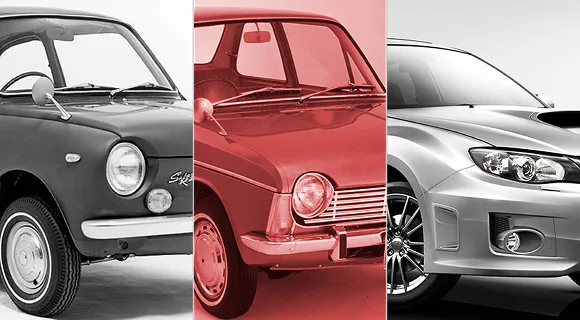
The development of the EJ model began with the aim to create a successor to the EA model, which was FHI’s first compact passenger car in the SUBARU 1000 era (1966) that was powered by the boxer engine. The development project aimed to maximize the already-high potential of the horizontally opposed engine, delivering high rigidity and efficiency that left no stone unturned.
The EJ20 succeeded in creating a high-quality driving sensation worthy of the first-generation Legacy, which strived to be a car truly made for the driver. Since then, this engine has become the base of a wide range of engine variations. The EJ20 can truly be said to be a symbol of SUBARU Engineering’s ethos of starting with high-quality design foundations and working unceasingly to add improvement upon improvement.
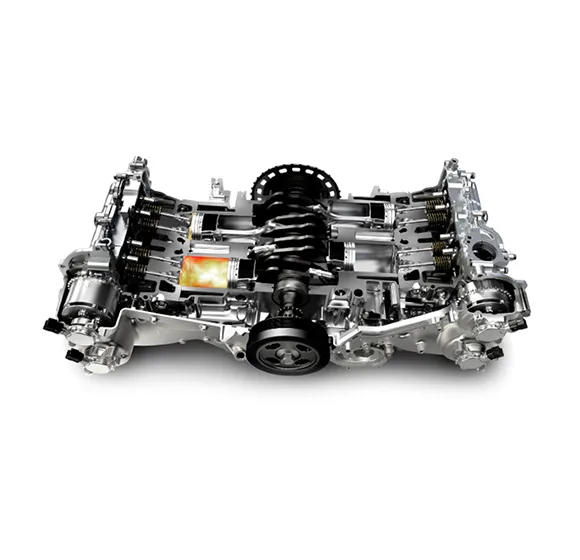
For the first time in 21 years, every function in this new boxer engine has been renewed to meet the demands of a new era. Thanks to across-the-board improvements including longer stroke, more compact combustion chambers, improved intake and exhaust efficiency due to the installation of dual AVCS, lighter piston weight, and decreased engine wear, the next-generation boxer realizes high combustion efficiency and superior fuel economy.
It has also successfully realized refreshingly responsive acceleration as well through rich reserves of low- to mid-range torque. All of these improvements deliver even greater everyday usability. By achieving both a high degree of environmental performance and driving pleasure, this boxer is worthy of being called a next generation engine.
This highly efficient turbocharged engine offers well balanced specifications for the entire car, including in terms of power, fuel efficiency, fuel type, and displacement. Equipped with direct fuel injection and Auto Stop Start System, this engine delivers high power without the feel associated with a small-displacement engine and great fuel efficiency without the feel associated with a turbocharged engine. SUBARU’s next-generation turbo engine is also cost-efficient since it uses regular gasoline, and the engine has good touring performance.
The FA20 builds on the base of the next-generation boxer engine’s design concept to develop a new normally aspirated engine, which aims for higher output and environmental performance as well as an even lower center of gravity. In addition to squaring the bore and stroke, the FA20 also incorporates the next-generation “D-4S”* direct injection technology. It has also realized output performance of 100 PS per liter, as well as low fuel consumption and cleaner emissions.
This engine, with the attention paid to aspects such as the engine note transmitted to the vehicle cabin, allows you to experience the enjoyment of the boxer engine to the fullest.* D-4S:Direct injection 4 stroke gasoline engine Superior version
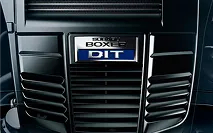
The FA20 DIT is based on the next-generation boxer “FA20”, and in a first for SUBARU, introduces Direct Injection turbo technology. Thanks to improvements to the knock resistance threshold, due to the adoption of direct injection as well as precise fuel injection control, the FA20 DIT has realized a high compression ratio and high efficiency that would have been impossible for previous turbo engines.
Despite being a 2.0-liter engine, the FA20 DIT boasts dominant sports performance, which surpasses large-capacity turbo engines, and unbelievably low fuel consumption and low exhaust emissions from that power. It is fair to say that the FA20 DIT offers the performance of a truly next-generation sports machine.
The world’s first commercial Horizontally-Opposed Diesel Engine developed for passenger vehicles is the SUBARU BOXER DIESEL. When petrol engines are converted to diesel, strengthening of the engine block usually makes the engine bigger and heavier. The SUBARU BOXER, however, was originally designed with rigidity in mind, allowing the 92.0 mm x 75.0 mm bore and stroke of the 2.0-litre petrol four-cylinder engine to be changed to a square 86.0 mm x 86.0 mm design.
The result is a more compact combustion chamber and greater fuel efficiency, and combined with a higher pressure common rail fuel injection, an improved oxidizing catalyst with closed Diesel Particulate Filter (DPF), a variable nozzle turbo and electric power steering, these all help to reduce fuel consumption and CO2 emissions.
Ceramic glow plugs also quicken starting in cold weather. And whilst meeting the ultra-clean EURO5 emission standards, the engine delivers even more torque compared to previous models. A prodigious 350-Nm of peak torque is delivered at a lower 1,600 rpm – providing smooth, free-breathing performance at any speed. These advantages are evidence of the vision that Subaru has in using the Horizontally-Opposed Engine.
The vertical chain continuously variable transmission known as Lineartronic is Subaru’s unique next generation CVT transmission and is featured in a great number of models. It will achieve superior fuel efficiency by not only continuously selecting the most suitable gear ratio, but also constantly using engine efficient operating ranges such as the lower range. Other features of Lineartronic include linear response to the accelerator, a smoother ride without gear shift shock and quietness.
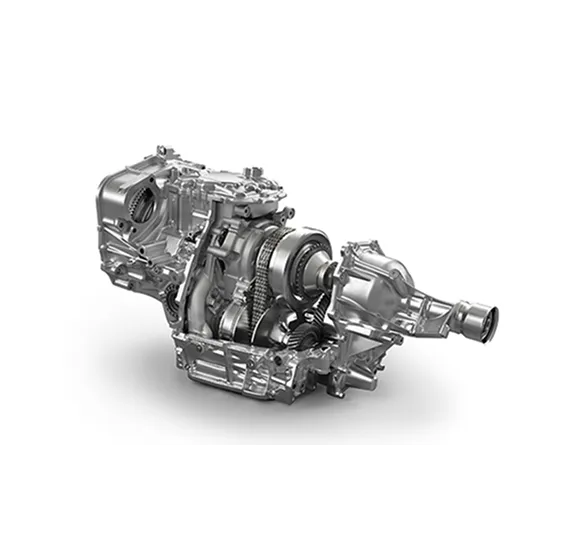
Designed in pursuit of a light and compact design. By adopting direct control, quick response to gear shifts and a smooth feel have been achieved. Downshift blipping control featured in the SUBARU BRZ enables smooth gear shifting by synchronizing the engine speed when moving into lower gears and increases the enjoyment of driving a sports car.
The vertical transmission available only with symmetrical AWD achieves a superior feeling of moderation and rigidity. The gear ratio is set at the level that maximizes fuel efficiency and driving performance. Subaru raises the level of enjoyment of driving and controlling a vehicle by individually developing the MT for each car model.
Subaru firmly believes that the Horizontally-Opposed Engine is the optimum design for driving enjoyment. The pistons face away from each other in a 180º symmetrical layout around the crankshaft and work to balance out each other’s vibrations, delivering a smooth, shudder-free feel. This is because the engine can rotate freely at any given speed, delivering heart-gripping response to the driver. The length and height of this engine layout can be kept shorter than a traditional in-line engine, and it is also lighter.
The engine can be mounted lower in the vehicle than other engines, and weight balance on the left and right can be made almost exactly the same. In this design, the low centre of gravity engine lowers the centre of gravity of the entire car. Similarly, a symmetrically balanced engine increases the symmetrical balance of the entire car. Both of these aspects combine to deliver a safer, more stable, and ultimately, more enjoyable experience on the road.
A boxer engine, or a horizontally opposed engine, is an engine configuration in which its pistons move toward each other in a horizontal direction. Subaru has been committed to the SUBARU BOXER engine for over 50 years for its many advantages over other engine types, providing durability and reliable performance in its vehicles.
Since the Horizontally-Opposed Engine is structured with the pistons mounted horizontally, it has a lower total height and is more compact and lighter than an in-line engine or a V engine. This allows for level cornering and more stable high-speed driving, thereby helping to realize the SUBARU ideal of enhanced driving safety.
The pistons in an in-line engine or a V engine generally move vertically. However, in the Horizontally-Opposed Engine, the opposed pistons move horizontally and the opposing forces cancel each other out, thereby reducing the amount of vibration and providing a more comfortable feel to the engine.
In the event of a head-on collision, the Subaru Boxer Engine and gearbox are designed to slide beneath the cabin for your protection. Related: Passive Safety
The ultra-low center of gravity packaging is the result of pursuing the advantages of the low center of gravity offered by the horizontally opposed Subaru Boxer engine to their limits. The Boxer engine, which had a low center of gravity to begin with, has been made lower and mounted closer to the center of the vehicle to truly lower the center of gravity of the vehicle overall.
This previously unheard of endeavor and innovation resulted in a gravitational center height that rivals that of super sports cars, excellent front and rear weight distribution and a new dimension of driving that has never been experienced before. The expertise in horizontally opposed engines, technology and passion for driving cultivated at Subaru have all been poured into this ultra-low center of gravity packaging.
Most sports cars make adjustments in the suspension system to ensure roll stiffness. In contrast, ultra-low center of gravity packaging has been achieved by pursuing the potential of the Boxer engine and the vehicle itself rather than unnecessarily tightening the suspension. This packaging makes it possible to enjoy excellent handling with little roll, instability, bumps and vibrations for a smooth and comfortable ride.
Load shift reduces postural changes, making it possible to achieve both gentle motion and steering response. This ultra-low center of gravity packaging has achieved a gravitational center height of 460 mm*1, among the top class in the world*2. This provides drivers with handling that has excellent response and a comfortable ride for all.
*1 In-house measurements *2 As of February 2012 (in-house research)
Better contact with the road surface, little roll, and fast convergence afforded by a low center of gravity create a sensation of the vehicle adhering to the road. The excellent front and rear weight distribution of 53:47* produces a direct response to steering. The enjoyment of this completely new handling can be experienced not only in limited settings such as circuits, but by anybody driving on public highways or roads with even slight curves. This is the attraction of ultra-low center of gravity packaging.
- The shapes of auxiliary equipment have been completely rethought to give the engine the lowest center of gravity possible.
- The driving position has been set at the lowest possible position to lower the center of gravity of the entire vehicle.
- A lightweight and highly rigid chassis has been specially designed to improve stability.
- Uses an FR layout and the pleasure of unembellished handling has been pursued to the utmost limit.
- A light yet strong body structure that ensures optimal performance for the front, rear and cabin has been developed.
Since being installed in the first-generation Legacy in 1989, the EJ20 has been proving itself on the front line for over two decades, and can be rightly considered one of SUBARU’s masterpieces.
The development of the EJ model began with the aim to create a successor to the EA model, which was FHI’s first compact passenger car in the SUBARU 1000 era (1966) that was powered by the boxer engine. The development project aimed to maximize the already-high potential of the horizontally opposed engine, delivering high rigidity and efficiency that left no stone unturned.
The EJ20 succeeded in creating a high-quality driving sensation worthy of the first-generation Legacy, which strived to be a car truly made for the driver. Since then, this engine has become the base of a wide range of engine variations. The EJ20 can truly be said to be a symbol of SUBARU Engineering’s ethos of starting with high-quality design foundations and working unceasingly to add improvement upon improvement.
For the first time in 21 years, every function in this new boxer engine has been renewed to meet the demands of a new era. Thanks to across-the-board improvements including longer stroke, more compact combustion chambers, improved intake and exhaust efficiency due to the installation of dual AVCS, lighter piston weight, and decreased engine wear, the next-generation boxer realizes high combustion efficiency and superior fuel economy.
It has also successfully realized refreshingly responsive acceleration as well through rich reserves of low- to mid-range torque. All of these improvements deliver even greater everyday usability. By achieving both a high degree of environmental performance and driving pleasure, this boxer is worthy of being called a next generation engine.
This highly efficient turbocharged engine offers well balanced specifications for the entire car, including in terms of power, fuel efficiency, fuel type, and displacement. Equipped with direct fuel injection and Auto Stop Start System, this engine delivers high power without the feel associated with a small-displacement engine and great fuel efficiency without the feel associated with a turbocharged engine. SUBARU’s next-generation turbo engine is also cost-efficient since it uses regular gasoline, and the engine has good touring performance.
The FA20 builds on the base of the next-generation boxer engine’s design concept to develop a new normally aspirated engine, which aims for higher output and environmental performance as well as an even lower center of gravity. In addition to squaring the bore and stroke, the FA20 also incorporates the next-generation “D-4S”* direct injection technology. It has also realized output performance of 100 PS per liter, as well as low fuel consumption and cleaner emissions.
This engine, with the attention paid to aspects such as the engine note transmitted to the vehicle cabin, allows you to experience the enjoyment of the boxer engine to the fullest.* D-4S:Direct injection 4 stroke gasoline engine Superior version
The FA20 DIT is based on the next-generation boxer “FA20”, and in a first for SUBARU, introduces Direct Injection turbo technology. Thanks to improvements to the knock resistance threshold, due to the adoption of direct injection as well as precise fuel injection control, the FA20 DIT has realized a high compression ratio and high efficiency that would have been impossible for previous turbo engines.
Despite being a 2.0-liter engine, the FA20 DIT boasts dominant sports performance, which surpasses large-capacity turbo engines, and unbelievably low fuel consumption and low exhaust emissions from that power. It is fair to say that the FA20 DIT offers the performance of a truly next-generation sports machine.
The world’s first commercial Horizontally-Opposed Diesel Engine developed for passenger vehicles is the SUBARU BOXER DIESEL. When petrol engines are converted to diesel, strengthening of the engine block usually makes the engine bigger and heavier. The SUBARU BOXER, however, was originally designed with rigidity in mind, allowing the 92.0 mm x 75.0 mm bore and stroke of the 2.0-litre petrol four-cylinder engine to be changed to a square 86.0 mm x 86.0 mm design.
The result is a more compact combustion chamber and greater fuel efficiency, and combined with a higher pressure common rail fuel injection, an improved oxidizing catalyst with closed Diesel Particulate Filter (DPF), a variable nozzle turbo and electric power steering, these all help to reduce fuel consumption and CO2 emissions.
Ceramic glow plugs also quicken starting in cold weather. And whilst meeting the ultra-clean EURO5 emission standards, the engine delivers even more torque compared to previous models. A prodigious 350-Nm of peak torque is delivered at a lower 1,600 rpm – providing smooth, free-breathing performance at any speed. These advantages are evidence of the vision that Subaru has in using the Horizontally-Opposed Engine.
The vertical chain continuously variable transmission known as Lineartronic is Subaru’s unique next generation CVT transmission and is featured in a great number of models. It will achieve superior fuel efficiency by not only continuously selecting the most suitable gear ratio, but also constantly using engine efficient operating ranges such as the lower range. Other features of Lineartronic include linear response to the accelerator, a smoother ride without gear shift shock and quietness.
Designed in pursuit of a light and compact design. By adopting direct control, quick response to gear shifts and a smooth feel have been achieved. Downshift blipping control featured in the SUBARU BRZ enables smooth gear shifting by synchronizing the engine speed when moving into lower gears and increases the enjoyment of driving a sports car.
The vertical transmission available only with symmetrical AWD achieves a superior feeling of moderation and rigidity. The gear ratio is set at the level that maximizes fuel efficiency and driving performance. Subaru raises the level of enjoyment of driving and controlling a vehicle by individually developing the MT for each car model.
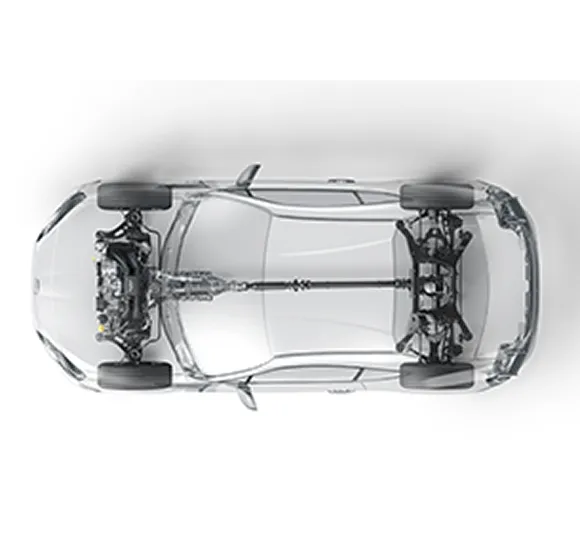
Symmetrical AWD, comprising of a longitudinally mounted Horizontally-Opposed SUBARU BOXER engine which achieves the low center of gravity and a symmetrically designed AWD drivetrain, is the system that Subaru has focused on for the best stability, safety and on-road performance at all times on all roads and in poor conditions.
It provides works with the outstanding traction of AWD to limit the chassis rolling and pitching, increasing ride comfort and making the journey enjoyable for all passengers. Subaru’s Symmetrical AWD comes in a variety of different systems depending on the vehicle type and the transmission used.
Stable even in sudden bad weather. Challenges the roughest roads. Runs along the intended line. And lets you drive with confidence regardless of your driving skill. SUBARU’s original core mechanism heightens stability, traction and agility to deliver such ideal performance.
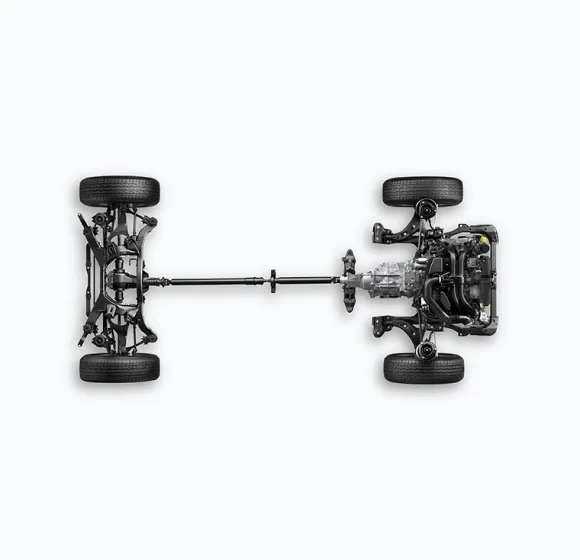
SUBARU’s power train is well-balanced with a horizontally opposed engine and transmission in a linear and symmetrical layout which minimizes left/right weight difference. This delivers stable driving for peace of mind even in sudden bad weather.
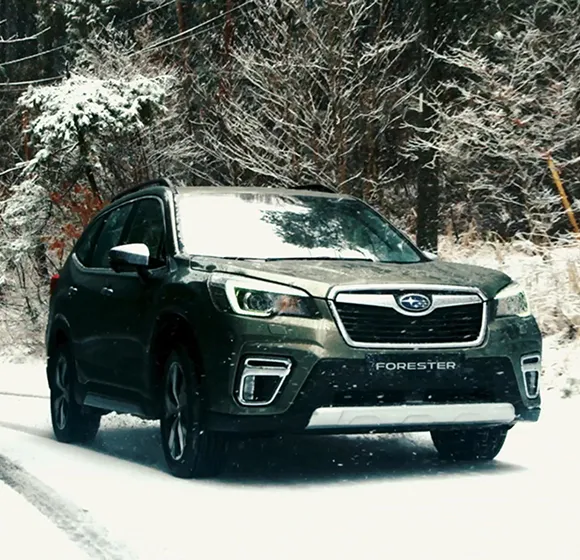
SUBARU believes AWD is the ideal drive system. As AWD distributes power to all four wheels, the tires firmly grip even slippery or rough roads, enabling powerful driving.

With SUBARU, vehicle swaying is controlled in all directions so you can drive smoothly along your intended line even on winding roads or during sudden steerin
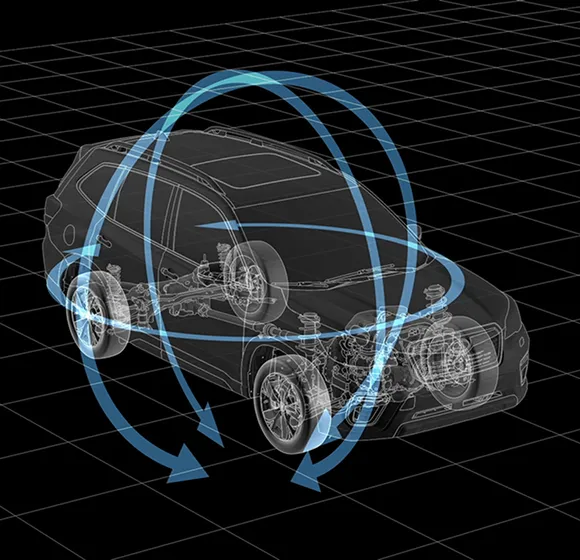
With a single button, X-Mode elevates your driving confidence, providing advanced, SUV-like control. It redefines security and peace of mind, ensuring you’re prepared for any rough or slippery road conditions.

This intelligent system seamlessly coordinates the engine, transmission, Symmetrical AWD, and brakes. This integrated control allows your Subaru to safely navigate nearly any type of terrain with remarkable ease.
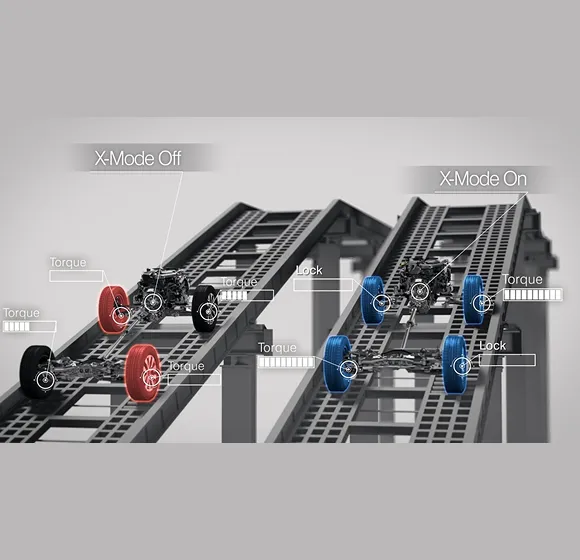
Ultimately, X-Mode delivers a driving experience where challenging roads no longer equate to stress. Instead, it offers enhanced stability and control, so you can focus on the journey with complete assurance.
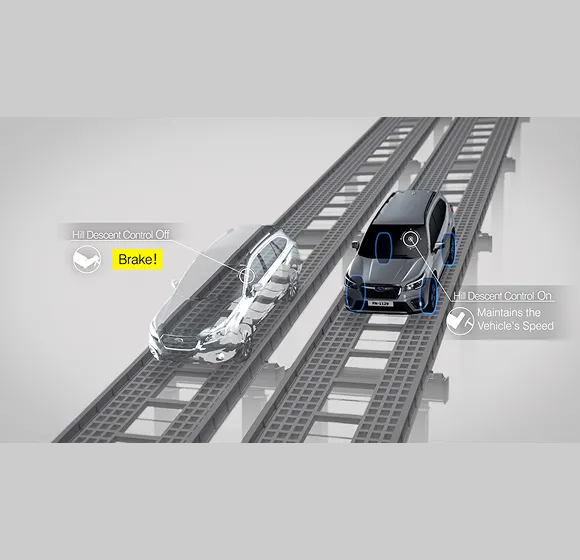
One button elevates driving confidence and provides advanced, SUV-like control. The all-new X-Mode brings a whole new meaning to security and peace of mind, regardless of how rough or slippery a road may be as it works to coordinate the engine, transmission, Symmetrical AWD and brakes to safely drive over almost any type terrain.
X-Mode assists in those cases where the vehicle starts moving faster as it drives downhill, like when driving down snowy roads or gravel slopes. Hill Descent Control maintains the vehicle’s speed so the driver can focus more on steering.
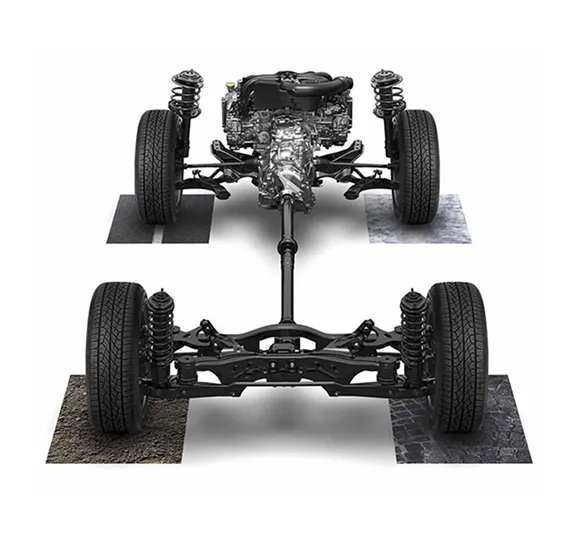
An AWD system developed exclusively for 4-speed automatic transmission, E-4AT (with manual mode) and Lineartronic models to maximise the reliable driving performance of AWD models under any driving conditions. The Lineartronic CVT (Continuous Variable Transmission) uses a chain instead of a belt—allowing a greater span of overall ratios for improved performance and efficiency as well as a faster response to throttle input.
The active torque-split AWD system usually distributes torque 60:40 front and rear, however sensors constantly monitor the vehicle’s condition in areas such as changes in grip of the front and rear tyres or vehicle speed. The electronically controlled MP-T (Multi Plate Transfer) adjusts torque distribution to the front and rear tyres in real-time to suit driving conditions, as well as the transmission and driver inputs. This further increases the stability of the AWD system to deliver a safe and agile driving experience.
An AWD system designed exclusively for 5-speed automatic transmission, E-5AT (with manual mode) models to provide aggressive, sporty driving with increased turning abilities all while retaining the fundamental driving stability offered by the Symmetrical AWD.
An uneven 45:55 front and rear torque distribution has been set for the front and rear tyres. Sending greater torque to the rear wheels can reduce understeer, a trait that plagues 4WD vehicles, when cornering for smooth and agile handling. Torque distribution is controlled automatically up to an equal 50:50 front and rear to suit road surface conditions for both sporty driving and stability.
An AWD system for manual transmissions with a simple layout consisting of a centre differential and viscous LSD. A 50:50 front and rear torque distribution is set under normal conditions. This maximises traction and provides driving backed with stability.
When the front or rear wheels slip and traction is lost, or the wheel speed differs between the front and rear axles, the viscous LSD maintains optimum torque distribution between the front and rear and distributes power to the wheels with the most traction. It links the flexible gear shifting of the manual transmission to deliver sporty driving that always maximises the available traction.
The Driver’s Control Centre Differential (DCCD) allows the centre differential locking of the WRX STI to be dialed in and adjust its handling. It adjusts both an electromagnetic multi-plate transfer clutch and mechanical locking of a Limited Slip Differential (LSD) to distribute torque to the front and rear wheels.
Auto Mode identifies the ideal power distribution for changing conditions, whilst Auto [+] keeps more power up front for increased traction. Auto [-] transfers more power to the rear for tighter cornering, and the six-step Manual Mode locks in the driver’s favourite handling characteristics.
Symmetrical AWD, comprising of a longitudinally mounted Horizontally-Opposed SUBARU BOXER engine which achieves the low center of gravity and a symmetrically designed AWD drivetrain, is the system that Subaru has focused on for the best stability, safety and on-road performance at all times on all roads and in poor conditions.
It provides works with the outstanding traction of AWD to limit the chassis rolling and pitching, increasing ride comfort and making the journey enjoyable for all passengers. Subaru’s Symmetrical AWD comes in a variety of different systems depending on the vehicle type and the transmission used.
Stable even in sudden bad weather. Challenges the roughest roads. Runs along the intended line. And lets you drive with confidence regardless of your driving skill. SUBARU’s original core mechanism heightens stability, traction and agility to deliver such ideal performance.
SUBARU’s power train is well-balanced with a horizontally opposed engine and transmission in a linear and symmetrical layout which minimizes left/right weight difference. This delivers stable driving for peace of mind even in sudden bad weather.
SUBARU believes AWD is the ideal drive system. As AWD distributes power to all four wheels, the tires firmly grip even slippery or rough roads, enabling powerful driving.
With SUBARU, vehicle swaying is controlled in all directions so you can drive smoothly along your intended line even on winding roads or during sudden steerin
With a single button, X-Mode elevates your driving confidence, providing advanced, SUV-like control. It redefines security and peace of mind, ensuring you’re prepared for any rough or slippery road conditions.
This intelligent system seamlessly coordinates the engine, transmission, Symmetrical AWD, and brakes. This integrated control allows your Subaru to safely navigate nearly any type of terrain with remarkable ease.
Ultimately, X-Mode delivers a driving experience where challenging roads no longer equate to stress. Instead, it offers enhanced stability and control, so you can focus on the journey with complete assurance.
One button elevates driving confidence and provides advanced, SUV-like control. The all-new X-Mode brings a whole new meaning to security and peace of mind, regardless of how rough or slippery a road may be as it works to coordinate the engine, transmission, Symmetrical AWD and brakes to safely drive over almost any type terrain.
X-Mode assists in those cases where the vehicle starts moving faster as it drives downhill, like when driving down snowy roads or gravel slopes. Hill Descent Control maintains the vehicle’s speed so the driver can focus more on steering.
An AWD system developed exclusively for 4-speed automatic transmission, E-4AT (with manual mode) and Lineartronic models to maximise the reliable driving performance of AWD models under any driving conditions. The Lineartronic CVT (Continuous Variable Transmission) uses a chain instead of a belt—allowing a greater span of overall ratios for improved performance and efficiency as well as a faster response to throttle input.
The active torque-split AWD system usually distributes torque 60:40 front and rear, however sensors constantly monitor the vehicle’s condition in areas such as changes in grip of the front and rear tyres or vehicle speed. The electronically controlled MP-T (Multi Plate Transfer) adjusts torque distribution to the front and rear tyres in real-time to suit driving conditions, as well as the transmission and driver inputs. This further increases the stability of the AWD system to deliver a safe and agile driving experience.
An AWD system designed exclusively for 5-speed automatic transmission, E-5AT (with manual mode) models to provide aggressive, sporty driving with increased turning abilities all while retaining the fundamental driving stability offered by the Symmetrical AWD.
An uneven 45:55 front and rear torque distribution has been set for the front and rear tyres. Sending greater torque to the rear wheels can reduce understeer, a trait that plagues 4WD vehicles, when cornering for smooth and agile handling. Torque distribution is controlled automatically up to an equal 50:50 front and rear to suit road surface conditions for both sporty driving and stability.
An AWD system for manual transmissions with a simple layout consisting of a centre differential and viscous LSD. A 50:50 front and rear torque distribution is set under normal conditions. This maximises traction and provides driving backed with stability.
When the front or rear wheels slip and traction is lost, or the wheel speed differs between the front and rear axles, the viscous LSD maintains optimum torque distribution between the front and rear and distributes power to the wheels with the most traction. It links the flexible gear shifting of the manual transmission to deliver sporty driving that always maximises the available traction.
The Driver’s Control Centre Differential (DCCD) allows the centre differential locking of the WRX STI to be dialed in and adjust its handling. It adjusts both an electromagnetic multi-plate transfer clutch and mechanical locking of a Limited Slip Differential (LSD) to distribute torque to the front and rear wheels.
Auto Mode identifies the ideal power distribution for changing conditions, whilst Auto [+] keeps more power up front for increased traction. Auto [-] transfers more power to the rear for tighter cornering, and the six-step Manual Mode locks in the driver’s favourite handling characteristics.
The SUBARU Global Platform is a next-generation platform that has been developed using all of the know-how and technological expertise that SUBARU has acquired over the years.
This new technology is the method to provide “a fun driving experience for all passengers regardless of the roads and weather conditions,” and it is also the solution that we have reached, through careful consideration of all the human senses and with our philosophy of car manufacturing, “focusing on the vehicle passengers.“ The SUBARU Global Platform enhances “Enjoyment and Peace of Mind” that is the SUBARU brand value, thereby allowing the passengers to enjoy an enriching car life.
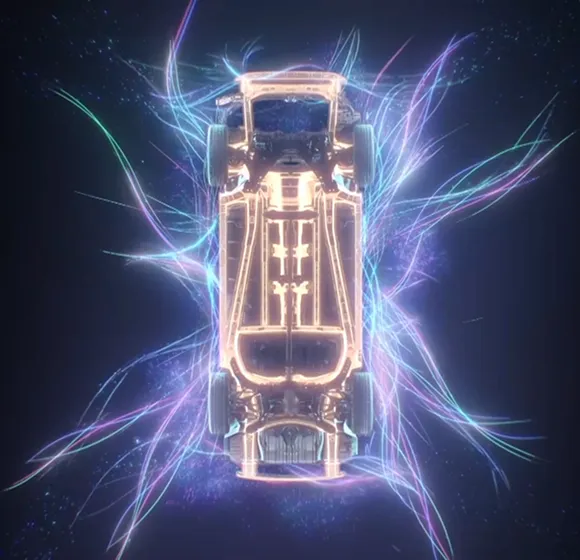
The Subaru Global Platform (SGP) is the underlying platform that will underpin next generation of Subaru vehicles. The SGP’s advancements throughout the chassis—higher rigidity, higher strength, lighter weight, better rolling resistance and responsive steering—particularly benefit these safety systems. It’s the future of Subaru, and delivers even more enjoyment and peace of mind to all drivers and passengers.
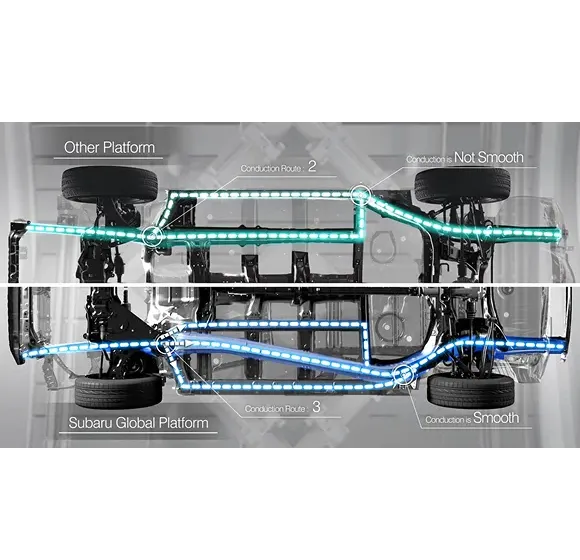
More responsive handling allows the driver to steer the car as intended that gives the confidence. Improvements in chassis rigidity, suspension, and stabilisers efficiently absorb shocks from the road and hide uneven surfaces, allowing more comfort and less fatigue on long rides. The result is a car that’s safer and more fun to drive.
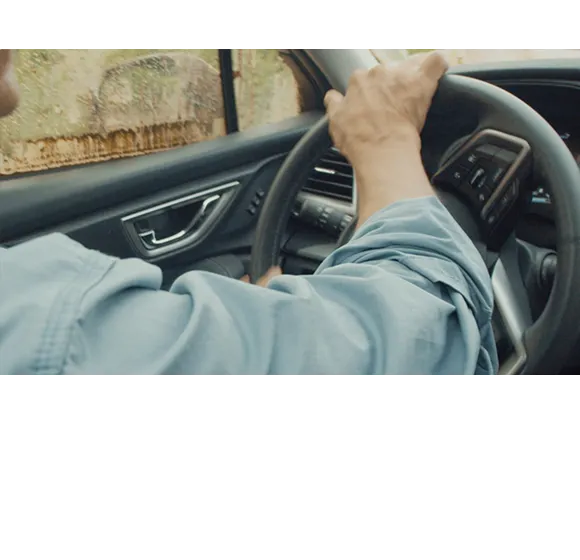
Unpleasant vibrations or noise have been minimised to ensure all passengers enjoy the ride and the conversation in a car. Suspension improvements and highly rigid chassis allow a comfortable cabin interior for all. The Subaru Global Platform (SGP) delivers enjoyment and peace of mind to all drivers and passengers.
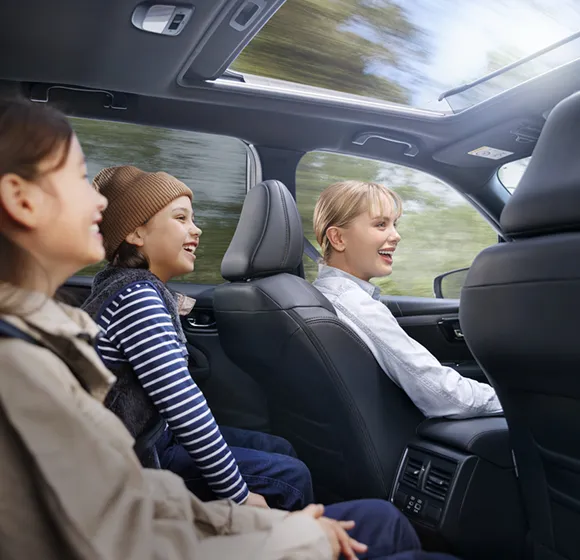
The SUBARU Global Platform is a next-generation platform that has been developed using all of the know-how and technological expertise that SUBARU has acquired over the years.
This new technology is the method to provide “a fun driving experience for all passengers regardless of the roads and weather conditions,” and it is also the solution that we have reached, through careful consideration of all the human senses and with our philosophy of car manufacturing, “focusing on the vehicle passengers.“ The SUBARU Global Platform enhances “Enjoyment and Peace of Mind” that is the SUBARU brand value, thereby allowing the passengers to enjoy an enriching car life.
The Subaru Global Platform (SGP) is the underlying platform that will underpin next generation of Subaru vehicles. The SGP’s advancements throughout the chassis—higher rigidity, higher strength, lighter weight, better rolling resistance and responsive steering—particularly benefit these safety systems. It’s the future of Subaru, and delivers even more enjoyment and peace of mind to all drivers and passengers.
More responsive handling allows the driver to steer the car as intended that gives the confidence. Improvements in chassis rigidity, suspension, and stabilisers efficiently absorb shocks from the road and hide uneven surfaces, allowing more comfort and less fatigue on long rides. The result is a car that’s safer and more fun to drive.
Unpleasant vibrations or noise have been minimised to ensure all passengers enjoy the ride and the conversation in a car. Suspension improvements and highly rigid chassis allow a comfortable cabin interior for all. The Subaru Global Platform (SGP) delivers enjoyment and peace of mind to all drivers and passengers.
At SUBARU, we believe in all-around safety. An important part of that is pre-collision safety: making every effort to ensure an accident never happens. That’s why we created EyeSight®, SUBARU’s cutting-edge driving support system. Like a second pair of eyes for the road ahead, EyeSight uses two stereo cameras capturing three-dimensional colour images with excellent image recognition, nearly as capable as the human eye. More accurate than traditional camera and sensor technologies, EyeSight uses images from both cameras to precisely determine shape, speed and distance, meaning it not only detects vehicles but also motorbikes, bicycles and pedestrians*. When a potential hazard is identified, it warns the driver and even applies the brakes if necessary, to help avoid an accident. With excellent safety performance, EyeSight gives the driver ultimate peace of mind.
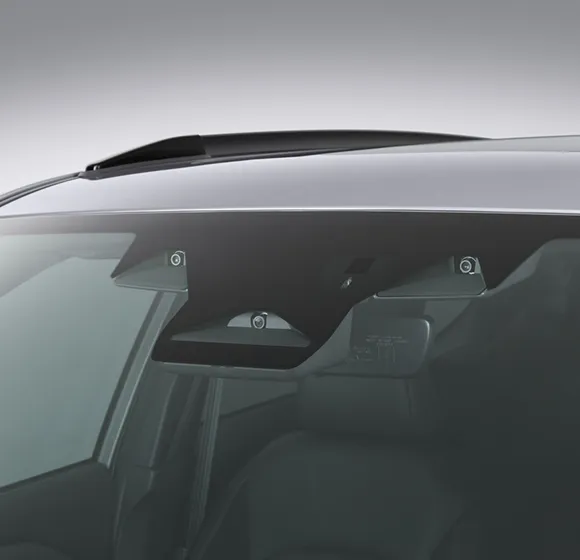
Adaptive Cruise Control allows the driver to set vehicle speed and distance to the car in front. It constantly monitors distance and speed then adjusts the engine, transmission and brakes accordingly to maintain speed in line with the traffic flow. Designed for use on motorways and similar roads, Adaptive Cruise Control improves driver comfort and convenience on long drives.
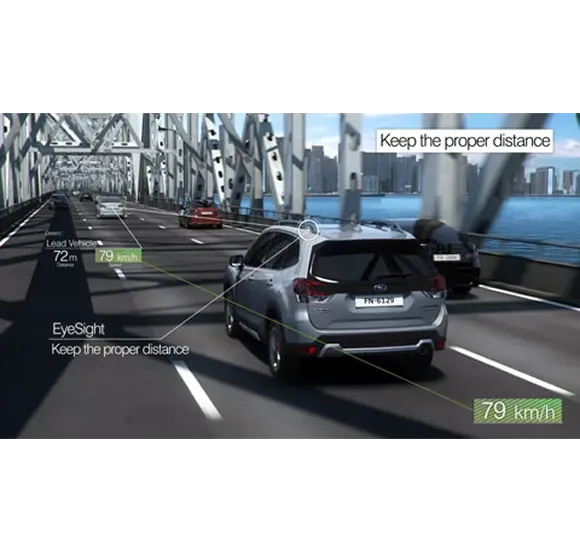
Lane Departure Warning will alert the driver with a visual and audible warning if the vehicle sways or departs its lane without indicating.
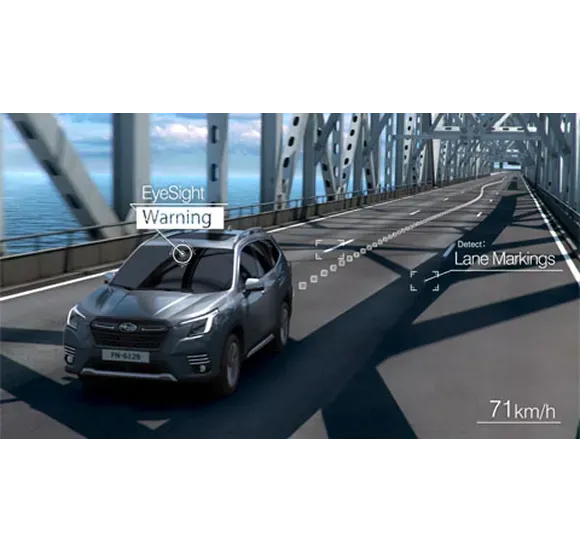
It’s easy to become distracted when waiting in stationary traffic. EyeSight will prompt the driver to notice that vehicles in front have started moving again with a buzzer and a flashing indicator.
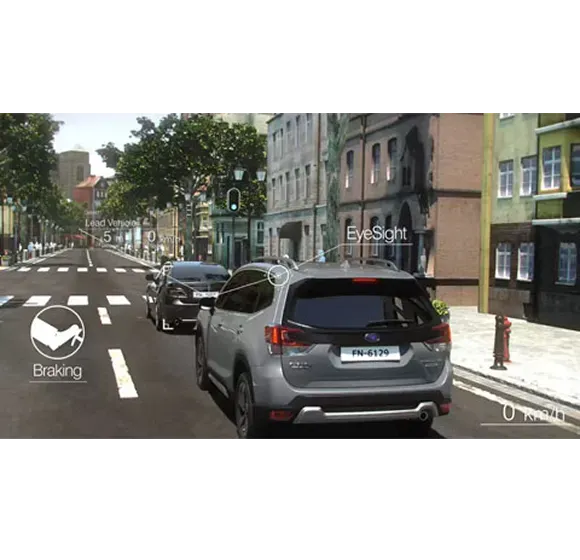
Lane Keep Assist will offer gentle steering control if the vehicle is about to deviate from its lane at approximately 40 mph or above.
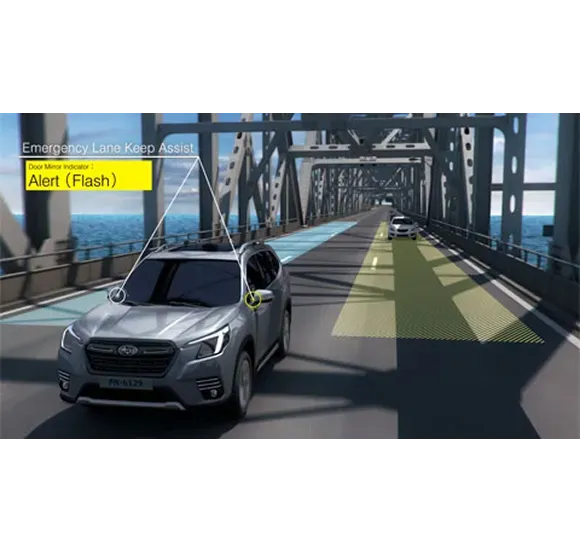
The Pre-collision Braking System activates visual and audible warnings to alert the driver of a potential collision. If the driver fails to take evasive action, the brakes will be applied automatically to either prevent an accident entirely or reduce the severity of an impact depending on speed. If the driver brakes but does not apply enough pressure, the system will increase braking force.
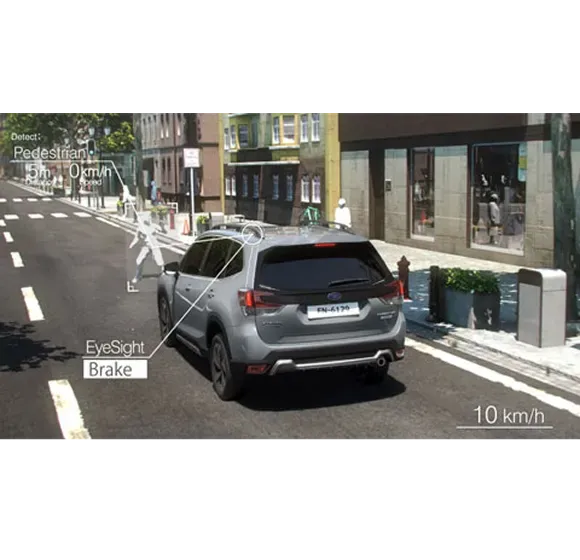
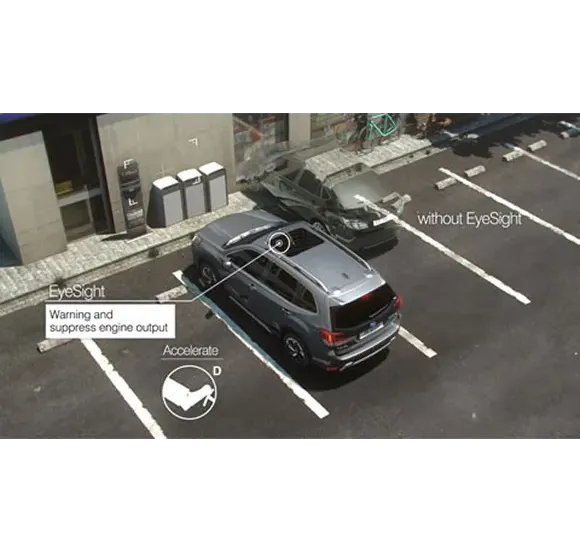
If the car is parked facing an obstacle, EyeSight will give the driver a visual and audible warning if they accidentally select drive instead of reverse. The system will also cut engine output to help avoid a frontal collision.
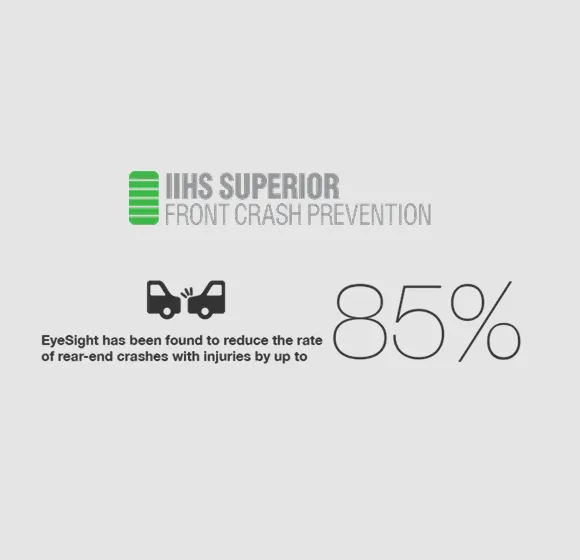
When equipped with EyeSight, all 2019 Subaru models receive the highest possible front crash prevention rating from IIHS highest rated claim from 2019 to 2020.
At SUBARU, we believe in all-around safety. An important part of that is pre-collision safety: making every effort to ensure an accident never happens. That’s why we created EyeSight®, SUBARU’s cutting-edge driving support system. Like a second pair of eyes for the road ahead, EyeSight uses two stereo cameras capturing three-dimensional colour images with excellent image recognition, nearly as capable as the human eye. More accurate than traditional camera and sensor technologies, EyeSight uses images from both cameras to precisely determine shape, speed and distance, meaning it not only detects vehicles but also motorbikes, bicycles and pedestrians*. When a potential hazard is identified, it warns the driver and even applies the brakes if necessary, to help avoid an accident. With excellent safety performance, EyeSight gives the driver ultimate peace of mind.
Adaptive Cruise Control allows the driver to set vehicle speed and distance to the car in front. It constantly monitors distance and speed then adjusts the engine, transmission and brakes accordingly to maintain speed in line with the traffic flow. Designed for use on motorways and similar roads, Adaptive Cruise Control improves driver comfort and convenience on long drives.
Lane Departure Warning will alert the driver with a visual and audible warning if the vehicle sways or departs its lane without indicating.
It’s easy to become distracted when waiting in stationary traffic. EyeSight will prompt the driver to notice that vehicles in front have started moving again with a buzzer and a flashing indicator.
Lane Keep Assist will offer gentle steering control if the vehicle is about to deviate from its lane at approximately 40 mph or above.
The Pre-collision Braking System activates visual and audible warnings to alert the driver of a potential collision. If the driver fails to take evasive action, the brakes will be applied automatically to either prevent an accident entirely or reduce the severity of an impact depending on speed. If the driver brakes but does not apply enough pressure, the system will increase braking force.
If the car is parked facing an obstacle, EyeSight will give the driver a visual and audible warning if they accidentally select drive instead of reverse. The system will also cut engine output to help avoid a frontal collision.
When equipped with EyeSight, all 2019 Subaru models receive the highest possible front crash prevention rating from IIHS highest rated claim from 2019 to 2020.
Subaru difference